pexels-bayawe-coffee-nomad-456337-1187761

Weekly Coffee Report: 24 February 2025

Focus on Japan: A recent report has found that Japan’s instant coffee market is set to reach US$ 4.56 billion by 2030. Two roots cause the result of this. Number one is the cost of living squeezed in a developed country with rising coffee prices pushing people to the instant coffee market. The growth of speciality coffee brands such as Allpress are transitioning to making instant coffee with speciality-grade. I also read recently, that there’s been a growth in coffee inventory stocks which is a factor contributing to price stability. Heading towards the end of February, we approach the beginning of the harvest season in Brazil which could start as early as the start of April. This is another factor that hopefully brings stability to the market as the old stock needs to be liquidated to make room for the new crop.

—

Market Overview: After weeks of historic price rises from the beginning of 2025, coffee trading experienced a slower week. Last Monday’s national holiday in the US paralysed trading, while the rest of the week saw volatile sessions with falling closures due to the March-to-May contract rollover. Despite recent fluctuations, market fundamentals remain strong, with low stocks in both producing and consuming countries and ongoing global climate challenges.

Stocks & Inventory: On Friday, February 21st, certified coffee stocks on ICE Futures US increased by 8,936 bags to 787,999 bags. This shows a significant year-over-year increase from 307,262 bags. However, stocks fell by 51,400 bags this week and have decreased by 112,385 bags since January.

Brazilian Market Conditions: Brazil faces a tight supply scenario for the first half of 2025. With minimal remaining coffee from the current harvest, meeting domestic consumption (1.7 million bags monthly until May) and export commitments through June pose challenges. The 2025 harvest is not expected to be larger than 2024 levels.

Weather and Shipping: Weather forecasts indicate changing conditions in centre-south producing areas, with a cold front expected to bring moderate rainfall, particularly affecting São Paulo and southern Minas Gerais regions.

Exports: As of the 21st of February, Brazilian February shipments totalled 1,886,730 bags (1,614,438 Arabica, 128,072 Conilon, 144,220 instant coffee), down from January’s 2,687,021 bags. Requests for the issuance of certificates of origin for February reached 2,113,954 bags, compared to January’s 3,473,199 bags.

Currency: On Friday, 21 February, the Brazilian Real closed at R$5.7310 to the dollar, up 0.47% from the previous week’s R$5.6970.
pexels-bayawe-coffee-nomad-456337-1187761

Weekly Coffee Report: 17 February 2025

In 2023-2024, global coffee production rose 5.8% to a record of 178 million bags. Global coffee consumption rose by 2.2% to a record of 177 million bags. There is still a surplus of 1 million bags. What we are experiencing is not necessarily a shortage of coffee but a shortage of coffee stock which kept the prices low. As the world is uncertain, many are moving away from company stocks and shares and moving towards other raw materials like gold and silver. Other raw materials such as oil, water and coffee that are consumables are also a safer investment against inflation and other shares and are adding pressure on the physical coffee market.


As for the latest coffee news from the previous week…

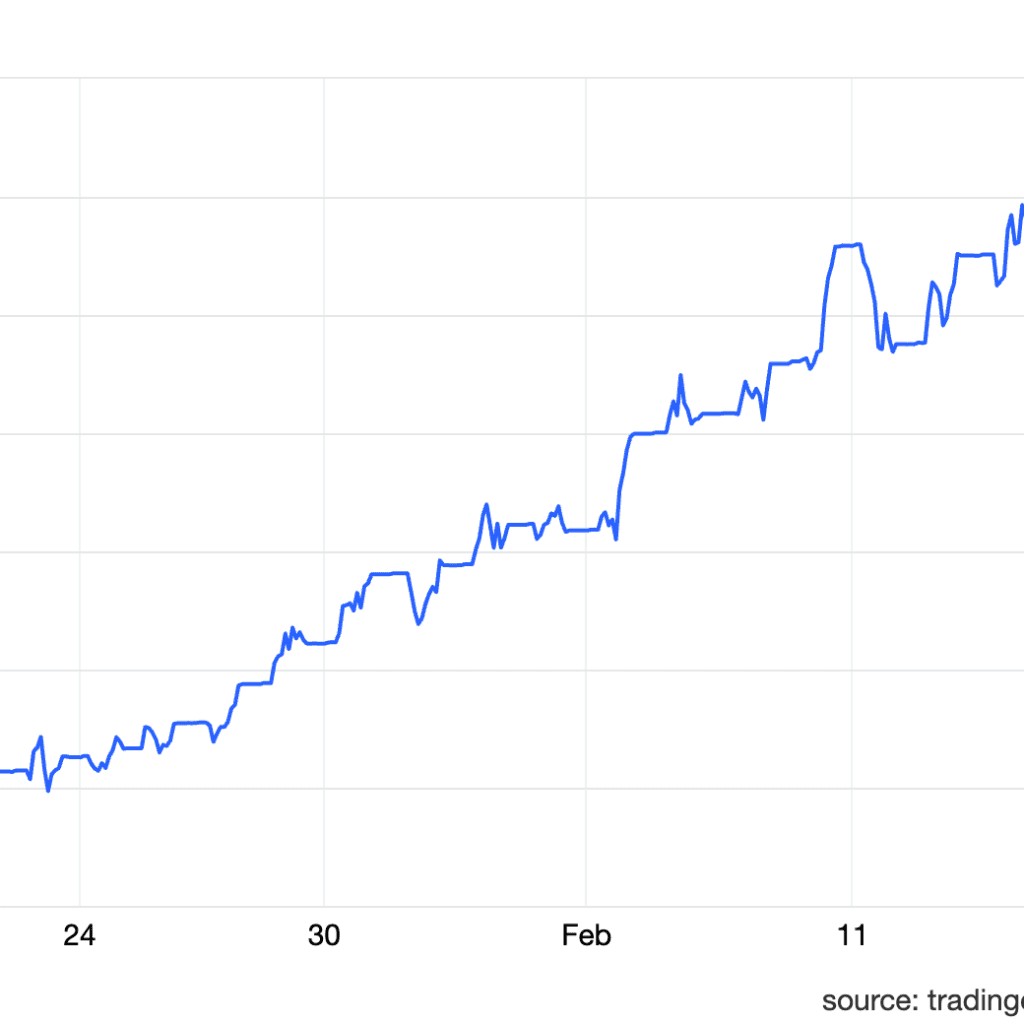
Market Overview: Arabica coffee futures hit new historical records this week on ICE Futures US, with March contracts reaching US$ 4.4085 per pound, a new record, before experiencing a sharp decline on Friday, 14 February. Despite this drop, Arabica contracts rose 3.80% for the week.

Market Fundamentals: Fundamentals of the coffee market remain the same with low stocks in both producing and consuming countries. Brazil’s situation remains particularly concerning, with estimates suggesting only 10-15% of the 2024 harvest remains with coffee growers. This creates challenges for meeting domestic consumption (approximately 1.7 million bags monthly) and export commitments through June. Weather conditions are adding pressure. According to CLIMATEMPO, this week there is a forecast for dry and hot weather in main coffee-producing areas until late February, potentially affecting bean development.

Stock Levels: ICE Futures US-certified coffee stocks decreased by 10,536 bags to a total of 839,399 bags. While this represents an increase of 536,937 bags from last year’s 302,462 bags, stocks have fallen by 23,339 bags this last week alone.

Physical Market: Brazil’s physical market remained calm this week despite sharp price increases over the past two months almost daily. Good quality Arabica coffee exceeded R$3,000 per bag, though trading volume remained low. Many sellers are holding back at current price levels, leading to transaction volumes below domestic consumption and export requirements.

Brazilian Exports: CECAFÉ reported January exports of 3,976,765 bags, slightly lower (approximately -1.63%) than January 2024 but up 1.35% from December. The breakdown includes 3,278,125 bags of Arabica, 328,074 bags of Conilon, and 365,598 bags of instant coffee. As of Friday, 14 February, shipments totalled 1,203,605 bags, with certificates of origin requests at 1,422,998 bags.

Currency Impact
: The Brazilian Real closed at R$5.6970 to the dollar, down 1.23% for the last week. March contracts in New York closed on Friday, 14 February at R$3,163.23 per bag.

pexels-bayawe-coffee-nomad-456337-1187761

Weekly Coffee Report: 10 February 2025

The global coffee market experienced a historic week. On Wednesday, 5 February, Arabica coffee contracts on ICE Futures US broke the $4 per pound barrier for the first time. On Friday, 7 February, contracts due for March reached $4.1395 per pound and closed at $4.0435.

The market fundamentals of the coffee market remain consistent: low stocks in producing and consuming countries with worldwide climate challenges are expected to continue into 2025. Brazil faces a particularly tight supply situation for the first half of 2025 (January – June) which indicates difficulties in upcoming domestic consumption and exports.

Brazil’s coffee consumption increased 1.1% from November 2023 to October 2024. According to ABIC, during this period Brazil reached 21.9 million bags despite higher retail prices. The country remains the world’s second-largest coffee consumer behind the United States, though Brazil leads in per capita consumption at 6.26 kg per year compared to the US’s 4.9 kg.

On Friday, 7 February, on ICE Futures US, Arabica contracts reached a new record in prices. The price rise has been dramatic, with March contracts accumulating a 7.01% rise this week and an 18.2% increase during the previous week. In January alone, the accumulated increase was 18.1%. By contrast to Arabica’s strong performance, Robusta contracts in London experienced a week of declines, falling by 157 dollars.

Certified coffee stocks on ICE Futures US stand at 862,738 bags. A year ago they were at 288,745 bags. The Brazilian physical market saw increased buying interest, but transaction volumes remain below what’s needed for domestic consumption and exports. There’s limited coffee being offered in the Brazilian market despite strong buyer interest in all coffee standards, for export and domestic consumption.

As of Thursday, 6 February Brazilian coffee shipments totalled 458,629 bags (426, 729 bags of arabica coffee, 17,480 bags of conilon coffee and 14,420 bags of instant coffee), compared to 324,929 bags at the same point in January. On Friday, 7 February, the Brazilian real closed at R$5.7930 to the dollar, with quotes for delivery for March contracts in New York closing at R$3,098.53 per bag, up from R$2,917.45 the previous Friday.

Weekly Coffee Report: 3 February 2025

Coffee contracts on ICE Futures US and ICE Europe rose sharply in January. Stocks are low in both producing and producing countries due to global climate-related problems with no forecast of ease in 2025. The situation is particularly tight in Brazil with the second half of their crop year (January-June), creating concerns about meeting future domestic and export demands.

CONAB’s first estimate for Brazil’s 2025 coffee harvest projected a 4.4% reduction compared to 2024’s harvest, contributing to price increases in both New York and London markets in the last week of January 2025. 

On Friday, 31st of January, Arabica coffee contracts on ICE Futures US broke records once again and hit a historic high, with March contracts reaching US$3.8105 per pound before closing at US$3.7785. Robusta coffee contracts on ICE Europe also hit a daily high and showed strong performance, with March contracts hitting $5,861 per ton before closing at $5,718. These contracts accumulated gains of $797 in January, following increases of $502 in December and $1,008 in November.

ICE Futures US-certified coffee stocks decreased by 18,304 bags to a total of 867,582 bags. While this represents an increase of 617,753 bags compared to last year, stocks fell by 112,385 bags in January alone.

The dollar closed today at R$5.8370, down 0.27%. It closed last week at R$5.9190 and the Friday before that at R$6.0650.

The Brazilian physical market saw increased buyer activity, though transaction volumes remain insufficient to meet Brazil’s domestic and export requirements. While there is a lot of strong buyer interest across all coffee standards, sellers showed limited interest in the offered prices.

Brazil’s soluble coffee sector reached impressive numbers in 2024, with exports reaching 4 million bags, representing a 13% growth from the previous year. This reinforces Brazil’s position as the world’s largest producer and exporter of soluble coffee, serving approximately 100 countries.

As of 30th of January 2025, January shipments totaled 3,668,618 bags, comprising: 3,081,859 bags of Arabica, 266,028 bags of Conilon, and 320,731 bags of instant coffee. Certificates of origin requests for January shipments reached 4,499,988 bags, up from 3,887,909 bags in the previous month.