WhatsApp-Image-2022-04-14-at-15.19.01-1

Weekly Coffee Report: Coffee Markets Continue To Be Disrupted.

Dear readers – coffee aficionados, coffee lovers,

I hope this message finds you well. Here comes another report about last week!

The coffee market continues to wander aimlessly. Like the last report, the coffee markets are being disrupted by new waves of communication, disruptive ever-changing technologies, changes in weather, lack of stocks and continued growth of coffee consumption. This has led the global economy to a complete global standstill and disorganisation caused by the COVID-19 pandemic, which has been aggravated by the Ukraine invasion by Russia.

The basics of the physical coffee market remain largely unaltered. Numbers released lately by the Brazilian Coffee Industry Association and the International Coffee Organisation (ICO) confirm that there has been growth of consumption – both in Brazil and worldwide. Yet, the global production of coffee, due to climate change, still has cause for concern. Current global stocks, as reported last week, are historically low. There are limited alternatives to consistent growth regarding re-stock of international global supplies.

Certified coffee stocks at ICE New York had fallen yesterday by 3,001 sacks. They ended last week on 1,077,178 sacks while a year ago there were 1,857,303 sacks – a fall of 780,125 sacks in a year. The uncertainties are due to climate uncertainties, lack of stock, high increase in consumption which results in a push and pressure on prices.

Yet, coffee is the most volatile commodity after oil which reacts to any news. This high speculative market is caused by traders who are not involved in physical markets. They only buy and shorten positions due to their short-term interests in the market itself, buying a minimum of 37,500 lbs per contract on the coffee market.

The ICO released a monthly report that informed that the global coffee market will register a deficit of 3.1 million sacks on the crop of 2021/2022 (from October to September). Already, in Brazil, the largest coffee producer of Arabica beans had a smaller crop in 2021. The ICO has forecasted a global coffee production of the year 2021/2022 at 167.2 million 60kg sacks – a decrease of 2.1% compared to the previous year. The consumption of coffee forecast is 170.3 million 60kg sacks – an annual growth of 3.3% (Source: Reuters).

Up to the 8th of April, shipments out of Brazil were 11,039 sacks of Arabica beans, 7,959 sacks of Robusta beans and 17,074 sacks of instant coffee – totalling 36,072 sacks. This is a decrease compared to the same day in March totalling 43,472 sacks. Up to the 8th of April, requests for certification of coffee origin for the month of April totalled 217,893 compared to 442,878 sacks on the same day in the month of March. Hence, this clearly shows that there have been fewer coffee beans shipped out of Brazil in April compared to March.

The New York Stock Exchange closed on Friday with an increase of 325 points – combining at around 233 USD/lbs – this was an increase compared to last week of about 5 USD per sack. Currency exchange between USD in BRL means that type 6 coffee in Brazil would cost BRL 1,410 while on Friday, 8 April, it cost BRL 1,442 which clearly shows a growth trend.

New Coffee Arriving

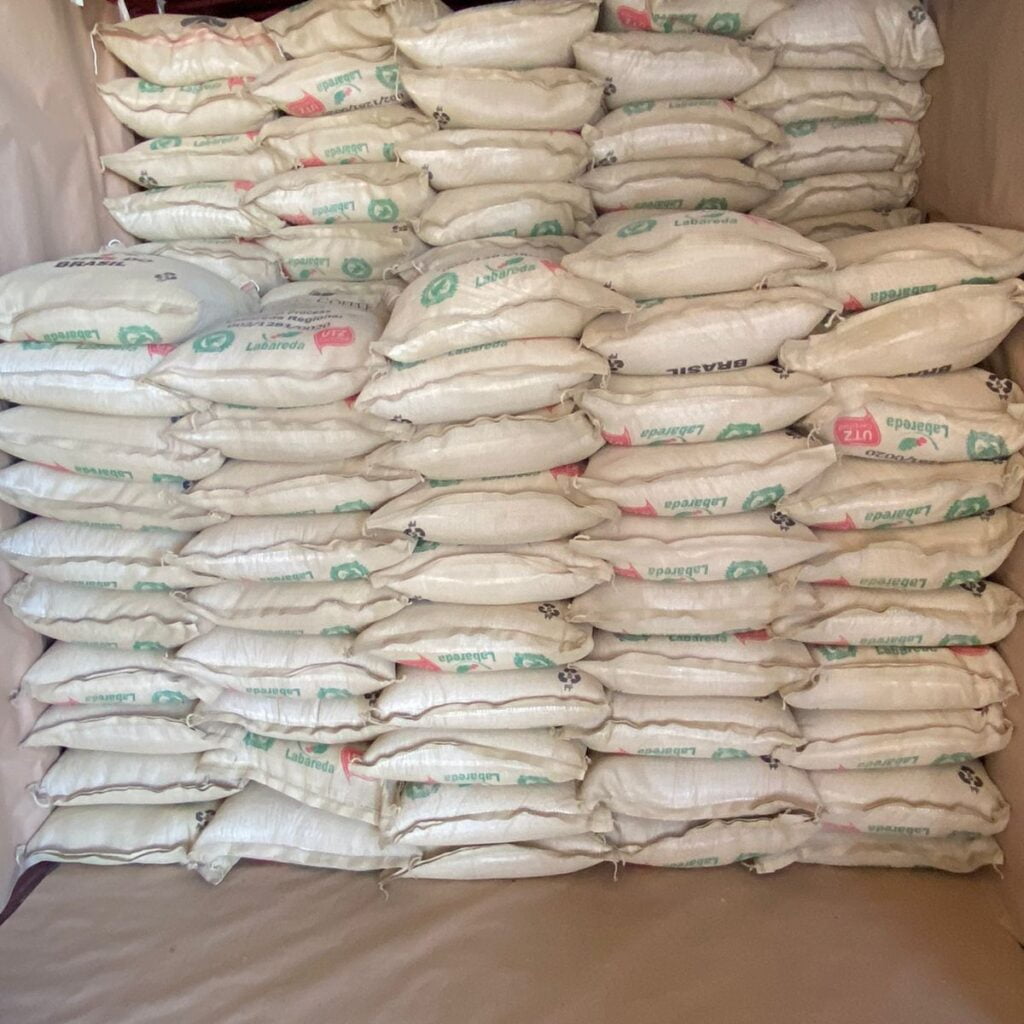
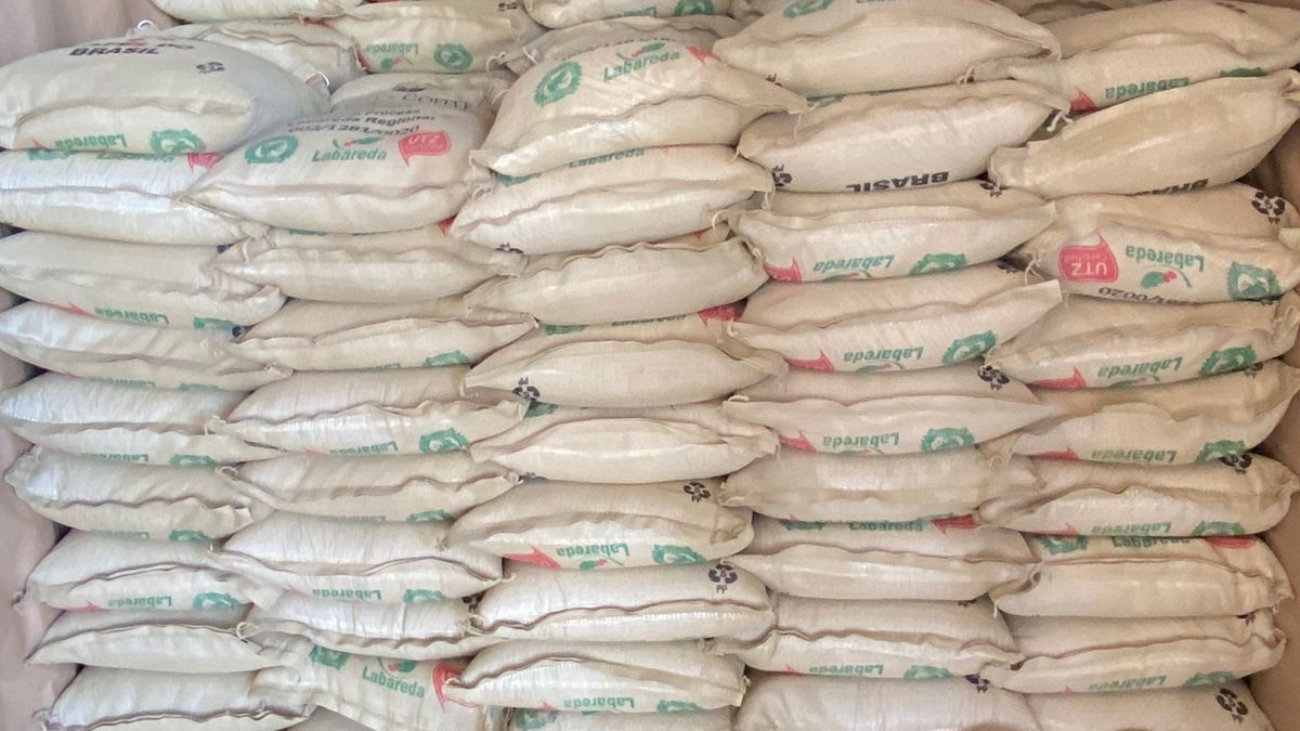
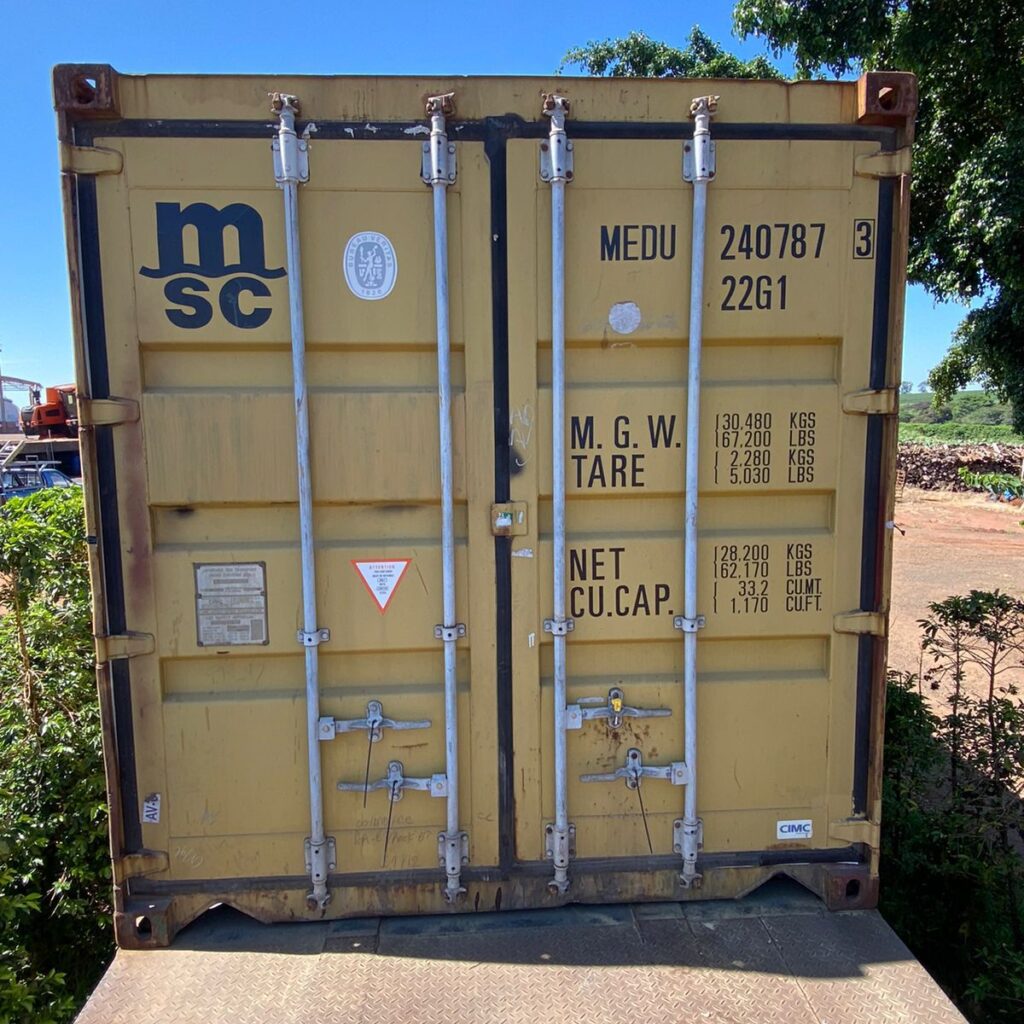
Our new container of coffee is now on the way to the UK.
Thank you!

Calum

WhatsApp-Image-2022-04-06-at-16.39.53

Weekly Coffee Report: London Coffee Festival & Fluctuating Markets.

Hello, coffee aficionados and coffee lovers.

Apologies for being out of the picture in the last few weeks. We’ve been busy recently, we attended the London Coffee Festival, and the world has been changing in the last couple of months – disruptive technologies, the war in Ukraine, climate change, extremely low number of stocks globally and myself sourcing and procuring more coffee has captured my attention in the past two weeks. This report will be based on last week (Friday 1, April) and hopefully, bring us updated and back to our routine of weekly reports as we should have another one released over the weekend as well! 

Overall, in this last week, we have had gridlock coffee negotiations which was been quite challenging for the coffee industry. On Monday, coffee contracts at ICE Futures US in New York retreated quite considerably. After Monday, the prices were on a trend upwards – on Friday 1st of April, they reached their maximum of USD 2.3040 – an increase of 200 points. By the end of the day, the price slightly retreated, closing at USD 2.2840, for the contracts starting in May. On Thursday, there was an increase of 455 points, yet on Monday there was a drop of 730 points. Overall, across the week, the market has increased by 655 points. Yet, compared to the previous week, the market had increased by 180 points. This showcases that the market trends combined with strong consumption and the current shortage of stocks have been pushing the prices up.

Nonetheless, investment funds that buy and sell coffee contracts have shortened their positions in the market itself which alleviates the pressure on price rises while monitoring the forecast of Brazilian crops for 2022 and 2023. The International Coffee Organisation (ICO) had forecasted a growth of 3% in 2021/2022 with coffee consumption being around 170.3 million sacks of 60kgs. COVID-19 has brought worries to the coffee market as the demand is outstripping the supply. Yesterday, ICO released information that there was an actual reduction of coffee exports by 0.8% between October 2021 and February 2022. Brazilian rainfall season has started to ease off in the southeast of the country in March. This decrease has been below the historical averages for the month of March, though this is much better than the last two years.

The stocks of certified coffee in the coffee market in New York have increased by 4726 sacks compared to last Thursday last week which is currently sitting at 1,084,842 sacks. A year ago, this amounted to 1,845,586 sacks – a drop of 760,744 bags. The USD compared to BRL has depreciated, the USD fell to the lowest recorded year (in the last two years) compared to the BRL which is currently valued at 4.7 BRL to 1 USD. This is quite negative as Brazil is the second-largest coffee consumer market in the world and there are less incentives for producers, exporters, brokers, and traders to export coffee. Hence, this has brought down the pressure on prices at origin. Coffee prices have dropped as the USD has dropped. Nonetheless, this might be inflated due to investors moving out of funding commodities in Russia and Ukraine which is now being funded in Brazil instead. With a greater influx of foreign direct investment, there will be a greater increase in BRL value.

The Brazilian market itself has been quite quiet as producers are reluctant to sell their coffee with a forecast set to increase. Up to the 1st of April, the March shipments included 2,781,704 sacks of Arabica beans, 111,555 sacks of Robusta beans and 292,635 sacks of instant coffee – totalling shipments out of Brazil at 3,185,894 sacks. This is an increase compared to the total amount of 2,622,540 sacks on the same day in February. Up to the 1st of April, the requests for certificates of origin had totalled 3,786,284 sacks compared to 3,362,564 sacks on the same day last month.

Thank you very much for the read – I hope you have a lovely week! Calum

Weekly Coffee Report: Visitors From Brazil.

Dear coffee friends, aficionados, lovers, and anybody who’s interested in our weekly coffee report – here are some notes from Cal’s Coffee:

Firstly, I would like to apologise for the last three weeks that we were away – we were hosting, visiting a coffee farmer here in the UK and only did a quarter of what we planned to do! I’m sure that this is going to be the first of many visits of the farmers who will come over and I know that many of you – roasters and readers – will have a chance to come and visit Brazil, to see the actual coffee farms.

Let’s get down to business and talk about coffee! In the last week, in Brazil, the market was quiet due to carnival (a long bank holiday that extends four-days) with only Friday operating during the week. There was a significant standstill due to the war between Ukraine and Russia. While, in the last 5 days, the market in Brazil was operating at a standstill, in the last 12 days, the coffee market has slumped in relation to the beginning of the year. In these last 12 days, there was a downfall of 1440 points. Coffee was being traded before the war at 265 US cents per pound and is currently being traded at 226.75 US cents per pound. At the end of last Friday, prices ended on 2.3865 US cents per pound.

The USD compared to BRL significantly depreciated which is having a negative impact on Brazilian exports due to the local market being more interested in trading and exporting coffee. Currently, there was an increase in value where 1 USD = 5.156 BRL while, last Wednesday, there was a decrease of 1.57 %. Last week, there was a slight increase of 0.2% altogether. Most of the coffee in Brazil has decreased in value. One coffee sack, on average, was 1,672 BRL and is now being traded at 1,482.52 BRL. There is little being offered as farmers don’t want to trade at these prices which is making the market stagnate.

International coffee stocks are still at an all-time low. Recently there were just above 1,250,088 sacks of certified coffee, while a year ago, on the same date, there were 1,797,622 sacks which is a decrease of 795,034 sacks of 60kg. We have never seen such low stocks of certified coffee. So, why have coffee prices taken such a shock? The reason why prices have dropped so much is due to the war.

We don’t realise that Russia is a large coffee-consuming country. They are the second largest importer of instant coffee that is made in Brazil – about 540,000 60 kg – and altogether Russia consumes 3.5 – 4 million sacks from all over the world. Sanctions and all other actions that the West is taking against Russia is considerably driving the price down for coffee in contrast to all other commodities. The coffee farmers in Brazil are very concerned due to the high dependency on importing fertilisers from Russia, especially the raw materials – potassium and phosphorous. All the bans and embargoes are pushing these costs 3x or 4x higher, which has been evident in the last 15 days.

Most coffee farmers have stock for the next 6 months while some buy stock on the spot. The same trading issues that are happening with coffee are happening with fertilisers between cooperatives and producers. On the 4th of March, shipments out of Brazil were 2876 sacks of Arabica beans, 3804 sacks of instant coffee, totalling 6680 sacks compared to the same day in February totalling 6246 sacks.

While there is little coffee offering in the market; however, the current crop is approaching. Some coffee farmers will start harvesting at end of the March (at its earliest). Though, due to the frost, and current forecasts of it not being a large crop, our Brazilian harvest is likely to start at the end of April/beginning of May. At closing time, a lot of the market is starting to look ahead. The forecast for 2023 is that there’ll be a lot of rain in Brazil which is more optimistic than the current harvest.

Let’s hope that Russia comes to its senses and stops a completely unnecessary war by bringing more stability to the world which is what we all need. Just a little trivia on raw materials; Russia and Ukraine are the largest exporters of wheat and corn compared to the USA and these are the two commodities that are driving a lot of the prices up for food – so keep an eye on this as it’s not just coffee that has pushed the prices up. Raw materials like wheat and corn will have a negative impact on inflation. Unfortunately, this is not the best of news but let’s hope that the future is brighter.

All the very best!

See you next week!

Calum