
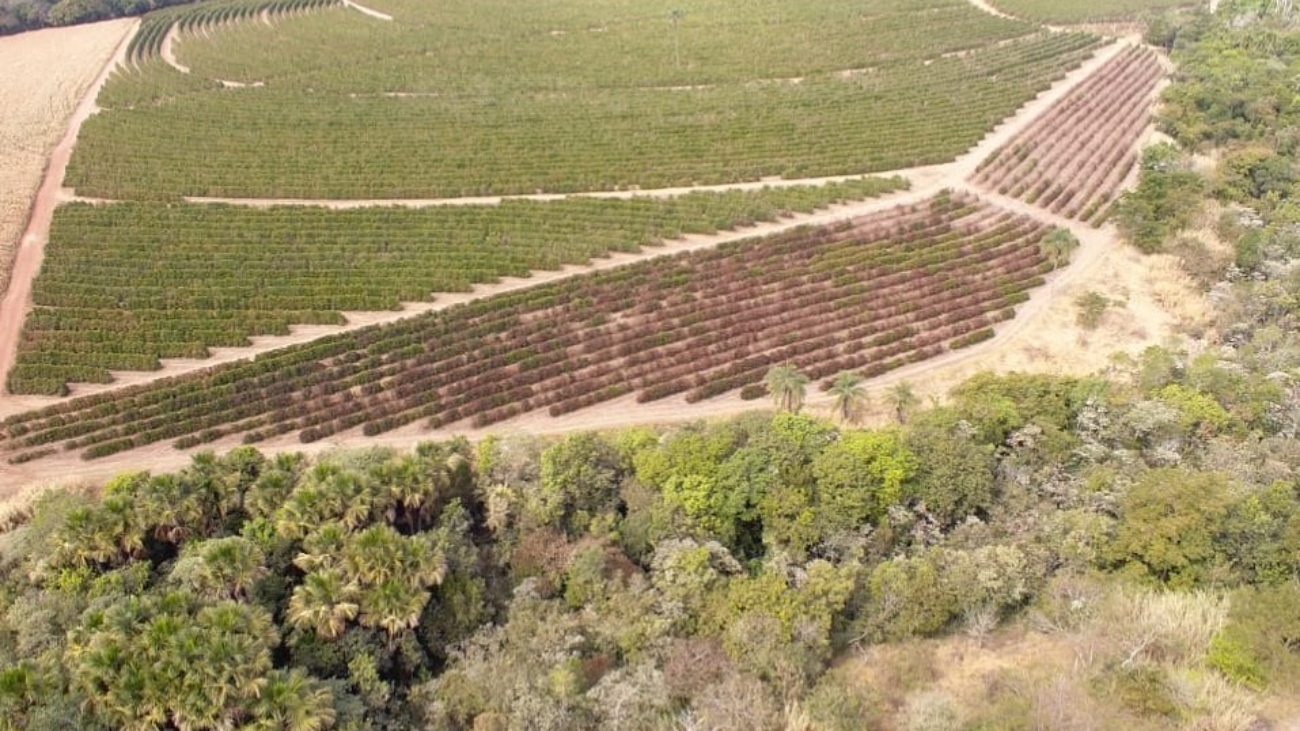
This report will not be focusing on the historical frost of 24/07/2021. As the market assesses the damages and coffee farmers lobby the Brazilian government for help, the market coffee on spot marketplace will offer unseen high prices for a while. This report will show the principles behind the price rise trend before the impact of the frost:
1st the pandemic impact on the farmers; the fear of lockdowns and retail industry closing doors such as roasteries and cafes made farmers hedge part of their future crops at cooperatives at prices at U$D 1.2 – 1.3 cents per lb weight.
2nd the drought of October, November and early December 2020 pushed again prices up. Farmers that have not hedged before, were again attracted to close future contracts delivering coffee to cooperatives. By price climbing to U$D 1.6 – 1.75 cents per lb coffee producers seems to become eager to hedge a small share. Yet to wait as the market forces finally strengthen the coffee producer position that had installed irrigation.
3rd Stock Levels of green coffee at consuming countries such as USA, Japan and Europe are at a historical low level on the beginning of 2021. After a Nestle reports that regardless of the lockdowns Nestle coffee consumption growth organically at 3.5 %. The demand of coffee only went from cafes to home brew during the pandemic.
4th Logistics and infrastructure bottlenecks in the global trade supply of containers also damages the supply flow of coffee. ON the 23rd of March Ever Given blocked the Suez Canal leading to major ship congestion in major ports such as Rotterdam, Kilindini Harbour – Mumbassa, Djibouti Ethiopia container shortage and New Orleans, LA. Staff shortages affecting harvest and farm labour to major shipping lines. All together with major strikes in Colombia’s major docks proved that 2021 shipping containers were more challenging than ever.
5th Vaccination programmes in the US and Western Europe drives consumption back to new heights. Cafes, restaurants, hotels, retail, and major roasteries start to place new orders and search for contracts. The rise in demand however will be halted by a strong frost on the 24/07/2021. Pushing prices over the U$D 2.00 cents per lb. making commercial coffee the prices of low-grade specialty coffee beans. Rates not seen since 2014.
The impact at origin of the frost will be assessed at the next post. This post offer context and highlight the structural challenges the coffee supply has gone through in the last 24 months. Large commercial roasters that are orientated on low prices will have a more challenging picture that those roasters focused on quality in the next months.
Supposably, the coffee prices continue to increase we should be put in perspective. Many farmer’s objective is to achieves NY futures prices. But what if the prices reach U$3.00 cents per lb? Roasters would be paying about U$4 – U$5 cents per lb. resulting on a coffee bag being sold at U$660 for 60kg sack (farmers getting U$D 400 per 60kg sacks), or £510 for green coffee. £10 per kg on green coffee (already discounting the 15 % weigh loss). The pass on charges will be passed on to the café, or retail. A café that sells a cup of coffee at £2.5 can extract some 50 cups for each kg. making £125 per kg.