pexels-bayawe-coffee-nomad-456337-1187761

Weekly Coffee Report: 17 February 2025

In 2023-2024, global coffee production rose 5.8% to a record of 178 million bags. Global coffee consumption rose by 2.2% to a record of 177 million bags. There is still a surplus of 1 million bags. What we are experiencing is not necessarily a shortage of coffee but a shortage of coffee stock which kept the prices low. As the world is uncertain, many are moving away from company stocks and shares and moving towards other raw materials like gold and silver. Other raw materials such as oil, water and coffee that are consumables are also a safer investment against inflation and other shares and are adding pressure on the physical coffee market.


As for the latest coffee news from the previous week…

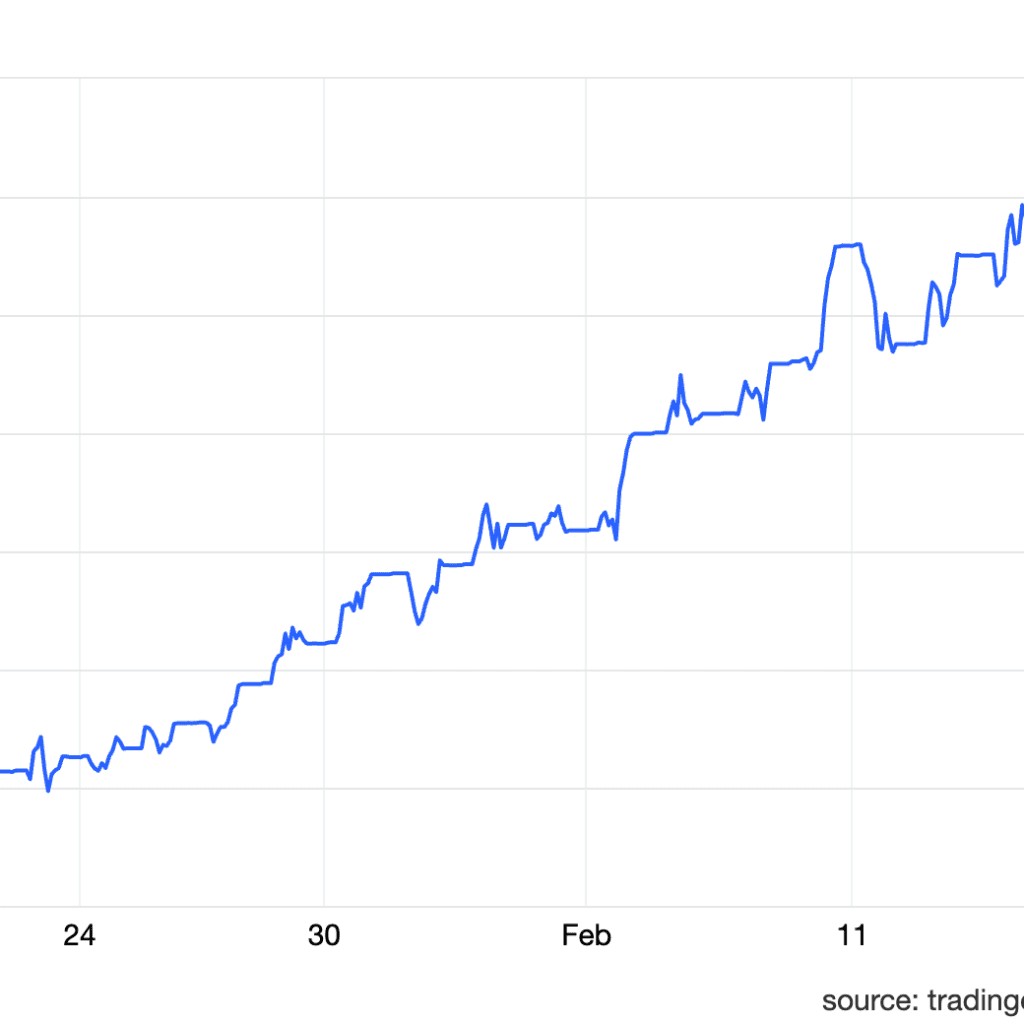
Market Overview: Arabica coffee futures hit new historical records this week on ICE Futures US, with March contracts reaching US$ 4.4085 per pound, a new record, before experiencing a sharp decline on Friday, 14 February. Despite this drop, Arabica contracts rose 3.80% for the week.

Market Fundamentals: Fundamentals of the coffee market remain the same with low stocks in both producing and consuming countries. Brazil’s situation remains particularly concerning, with estimates suggesting only 10-15% of the 2024 harvest remains with coffee growers. This creates challenges for meeting domestic consumption (approximately 1.7 million bags monthly) and export commitments through June. Weather conditions are adding pressure. According to CLIMATEMPO, this week there is a forecast for dry and hot weather in main coffee-producing areas until late February, potentially affecting bean development.

Stock Levels: ICE Futures US-certified coffee stocks decreased by 10,536 bags to a total of 839,399 bags. While this represents an increase of 536,937 bags from last year’s 302,462 bags, stocks have fallen by 23,339 bags this last week alone.

Physical Market: Brazil’s physical market remained calm this week despite sharp price increases over the past two months almost daily. Good quality Arabica coffee exceeded R$3,000 per bag, though trading volume remained low. Many sellers are holding back at current price levels, leading to transaction volumes below domestic consumption and export requirements.

Brazilian Exports: CECAFÉ reported January exports of 3,976,765 bags, slightly lower (approximately -1.63%) than January 2024 but up 1.35% from December. The breakdown includes 3,278,125 bags of Arabica, 328,074 bags of Conilon, and 365,598 bags of instant coffee. As of Friday, 14 February, shipments totalled 1,203,605 bags, with certificates of origin requests at 1,422,998 bags.

Currency Impact
: The Brazilian Real closed at R$5.6970 to the dollar, down 1.23% for the last week. March contracts in New York closed on Friday, 14 February at R$3,163.23 per bag.
pexels-bayawe-coffee-nomad-456337-1187761

Weekly Coffee Report: 10 February 2025

The global coffee market experienced a historic week. On Wednesday, 5 February, Arabica coffee contracts on ICE Futures US broke the $4 per pound barrier for the first time. On Friday, 7 February, contracts due for March reached $4.1395 per pound and closed at $4.0435.

The market fundamentals of the coffee market remain consistent: low stocks in producing and consuming countries with worldwide climate challenges are expected to continue into 2025. Brazil faces a particularly tight supply situation for the first half of 2025 (January – June) which indicates difficulties in upcoming domestic consumption and exports.

Brazil’s coffee consumption increased 1.1% from November 2023 to October 2024. According to ABIC, during this period Brazil reached 21.9 million bags despite higher retail prices. The country remains the world’s second-largest coffee consumer behind the United States, though Brazil leads in per capita consumption at 6.26 kg per year compared to the US’s 4.9 kg.

On Friday, 7 February, on ICE Futures US, Arabica contracts reached a new record in prices. The price rise has been dramatic, with March contracts accumulating a 7.01% rise this week and an 18.2% increase during the previous week. In January alone, the accumulated increase was 18.1%. By contrast to Arabica’s strong performance, Robusta contracts in London experienced a week of declines, falling by 157 dollars.

Certified coffee stocks on ICE Futures US stand at 862,738 bags. A year ago they were at 288,745 bags. The Brazilian physical market saw increased buying interest, but transaction volumes remain below what’s needed for domestic consumption and exports. There’s limited coffee being offered in the Brazilian market despite strong buyer interest in all coffee standards, for export and domestic consumption.

As of Thursday, 6 February Brazilian coffee shipments totalled 458,629 bags (426, 729 bags of arabica coffee, 17,480 bags of conilon coffee and 14,420 bags of instant coffee), compared to 324,929 bags at the same point in January. On Friday, 7 February, the Brazilian real closed at R$5.7930 to the dollar, with quotes for delivery for March contracts in New York closing at R$3,098.53 per bag, up from R$2,917.45 the previous Friday.

Weekly Coffee Report: 3 February 2025

Coffee contracts on ICE Futures US and ICE Europe rose sharply in January. Stocks are low in both producing and producing countries due to global climate-related problems with no forecast of ease in 2025. The situation is particularly tight in Brazil with the second half of their crop year (January-June), creating concerns about meeting future domestic and export demands.

CONAB’s first estimate for Brazil’s 2025 coffee harvest projected a 4.4% reduction compared to 2024’s harvest, contributing to price increases in both New York and London markets in the last week of January 2025. 

On Friday, 31st of January, Arabica coffee contracts on ICE Futures US broke records once again and hit a historic high, with March contracts reaching US$3.8105 per pound before closing at US$3.7785. Robusta coffee contracts on ICE Europe also hit a daily high and showed strong performance, with March contracts hitting $5,861 per ton before closing at $5,718. These contracts accumulated gains of $797 in January, following increases of $502 in December and $1,008 in November.

ICE Futures US-certified coffee stocks decreased by 18,304 bags to a total of 867,582 bags. While this represents an increase of 617,753 bags compared to last year, stocks fell by 112,385 bags in January alone.

The dollar closed today at R$5.8370, down 0.27%. It closed last week at R$5.9190 and the Friday before that at R$6.0650.

The Brazilian physical market saw increased buyer activity, though transaction volumes remain insufficient to meet Brazil’s domestic and export requirements. While there is a lot of strong buyer interest across all coffee standards, sellers showed limited interest in the offered prices.

Brazil’s soluble coffee sector reached impressive numbers in 2024, with exports reaching 4 million bags, representing a 13% growth from the previous year. This reinforces Brazil’s position as the world’s largest producer and exporter of soluble coffee, serving approximately 100 countries.

As of 30th of January 2025, January shipments totaled 3,668,618 bags, comprising: 3,081,859 bags of Arabica, 266,028 bags of Conilon, and 320,731 bags of instant coffee. Certificates of origin requests for January shipments reached 4,499,988 bags, up from 3,887,909 bags in the previous month.

pexels-bayawe-coffee-nomad-456337-1187761

Weekly Coffee Report: 27 January 2025

As of Friday, 24th of January, coffee prices have soared this week on both major exchanges, with Arabica contracts on ICE Futures US reaching a daily high of $3.4980 per pound and Robusta contracts on ICE Europe hitting their highest price of the day at $5,600 per ton. The fundamentals of the coffee market are the same with low stocks, both in producing and consuming countries, and climate crisis challenges around the world which are putting pressure on prices to record levels. 

Stocks of certified coffee on ICE Futures US, up from last year, remain relatively tight at 928,935 bags on Friday, 24 January. Further, extreme weather events are creating significant supply concerns and increasing each year. From California facing devastating fires to historic blizzards along the U.S. Gulf Coast bringing snow, these climate-related disruptions are becoming more frequent and severe. This raises concerns about future coffee production.

According to CEPEA, Robusta coffee continues to be traded at high levels in the Brazilian domestic market. Since January 17, Conilon/Robusta coffee trading has been above R$2,000 per 60-kilo bag – a level never seen before in records dating back to 2003. This reflects the growing importance of Robusta in the global coffee landscape.

In Brazil, despite the coffee contracts rising sharply, trading activity in the Brazilian physical market has remained modest, partially due to the Brazilian real’s recovery against the U.S. dollar. Throughout the week, buyers improved their purchase bases in the Brazilian physical market but were unable to stimulate sellers. The volume of closed deals remained low. There is a lot of interest from buyers for all coffee standards, for export and domestic consumption, but there is little interest from sellers offered by buyers.

As of the third week of January, export activity from Brazil remains robust. The January shipments reached 2.69 million bags as of January 23rd, exceeding December’s figures. The increased demand is evident in the higher number of requests for certificates of origin, jumping from 2.97 million bags in December to 3.47 million bags in January.

These market conditions suggest continued price volatility as the coffee industry struggles to deal with climate challenges and supply constraints in the future months.

pexels-bayawe-coffee-nomad-456337-1187761

Weekly Coffee Report: 17 January 2025

Brazil has reached a historical record in coffee exports, shipping 50.4 million bags in 2024, marking an extraordinary growth trajectory over the past 25 years. From 23 million bags in 1999, exports grew to 30.3 million bags in 2009 and 40.7 million bags in 2019. This growth was achieved through research, investment, and improved productivity, while also reducing planted area and increasing environmental reserves.

With the fundamentals unchanged, recent market activity has been characterised by significant volatility for ICE Futures US and ICE Europe. On the ICE Futures US, Arabica coffee contracts for March delivery closed at US $3.2835 per pound. Similarly, Robusta contracts on ICE Europe broke through the $5,000 per tonne barrier, closing at $5,006. Certified coffee stocks at ICE increased by 3,235 bags on Friday, 17 January to a total of 982,377 bags on the day. This shows an increase of 267,340 bags from a year ago.

In the domestic market, the second week of January saw increased offer volumes from producers, though actual transactions remained limited due to price disagreements between buyers and sellers. High-quality Arabica coffee with a good screen size (17 and 18) is being quoted from R$2,350 per bag.

December 2024 export data from CECAFÉ (Brazilian Coffee Exporters Council) shows total shipments of 3.81 million (60kg) bags, representing an approximate 8.1% decrease compared to December 2023 and a 22% decline from November 2024. The breakdown includes 2.84 million bags of Arabica, 563,000 bags of Robusta, and 398,000 bags of instant coffee.

Looking ahead to January 2025, early shipping data (up to Friday, January 17) indicates exports of 1.79 million bags, with certificates of origin requests totalling 2.52 million bags, suggesting potentially stronger export performance compared to December 2024.

On Friday, January 17 the Brazilian real closed at R$6.0650 to the dollar, with March coffee contracts on the New York Stock Exchange closing at R$2,634.28 per bag, showing modest gains over the previous weeks.

pexels-bayawe-coffee-nomad-456337-1187761

How Green Coffee Stock Has Perfomed (December 2024)

Last week was another incredibly crazy week with an all-time high since 1975. The week finished at an unbelievable rate of 3.30 USD/lbs. The volatility of coffee contracts in the US and Europe is still the highest in the 21st century. This surprised many traders from Wednesday onwards when the growth rate seemed unstoppable and was cut off by the weekend.

The fundamental market conditions of coffee have not changed including ongoing climate challenges and global trends pushing production downward. The largest coffee-producing countries, Brazil and Vietnam, are forecasting average production. Potential price fluctuations would likely stem from a considerable drop in demand which currently seems improbable.

Continued rainfall in Brazil is promoting healthy coffee tree conditions. While this may not impact the immediate 2024-2025 crop, it presents a potential excellent harvest for the following year of 2026.

It is estimated that only 20% of the 2024 Brazilian crop is in the hands of the producers which means that most Brazilian coffee has already swapped hands and is in the hands of traders, cooperatives, or exporters. The tonnage of Robusta coffee, from the international coffee exchange in London, is at 5,193 USD/ton which is an all-time high for Robusta coffee. There has been a 23.8% rise in November alone.

The stocks of coffee have increased by 8,820 bags on Friday, 6 December 2024, which totals 905,831 bags. A year ago there used to be 234,699 which is an increase of 671,132 bags.

The Brazilian dollar closed on Friday, 6 December 2024, at above 6 BRL/1 USD which is an increase of 1%. In Brazil, the market is slow with little being traded. There is a huge demand for coffee types for export and shortages of low-grade coffee that is being traded internally in Brazil. There are also shortages of low-grade coffee across the market. The prices for coffee types to be exported are commanding premium prices.

Up to the 4th of December 2024, the shipments from November totalled 3,424,578 bags of Arabica, 679,961 bags of Robusta, and 356,824 bags of Instant coffee. This totalled 4,461,363 bags compared to 3,871,573 bags in the same month of October. The coffee traders have strong expectations that coffee prices will stabilise at current high levels or potentially increase further.

While the consumer market may not feel the pressure to increase prices by 10p per cup, the cafés and roasters are likely to bear the brunt. Producers need to secure the best value for their crops, given the uncertainty of the future. Their current cash flow will have to survive for the next two years with an anticipated lower yield next year and hoping for an even better one the following year.

WASHED COFFEE

These Are The Different Processes Green Coffee Goes Through.

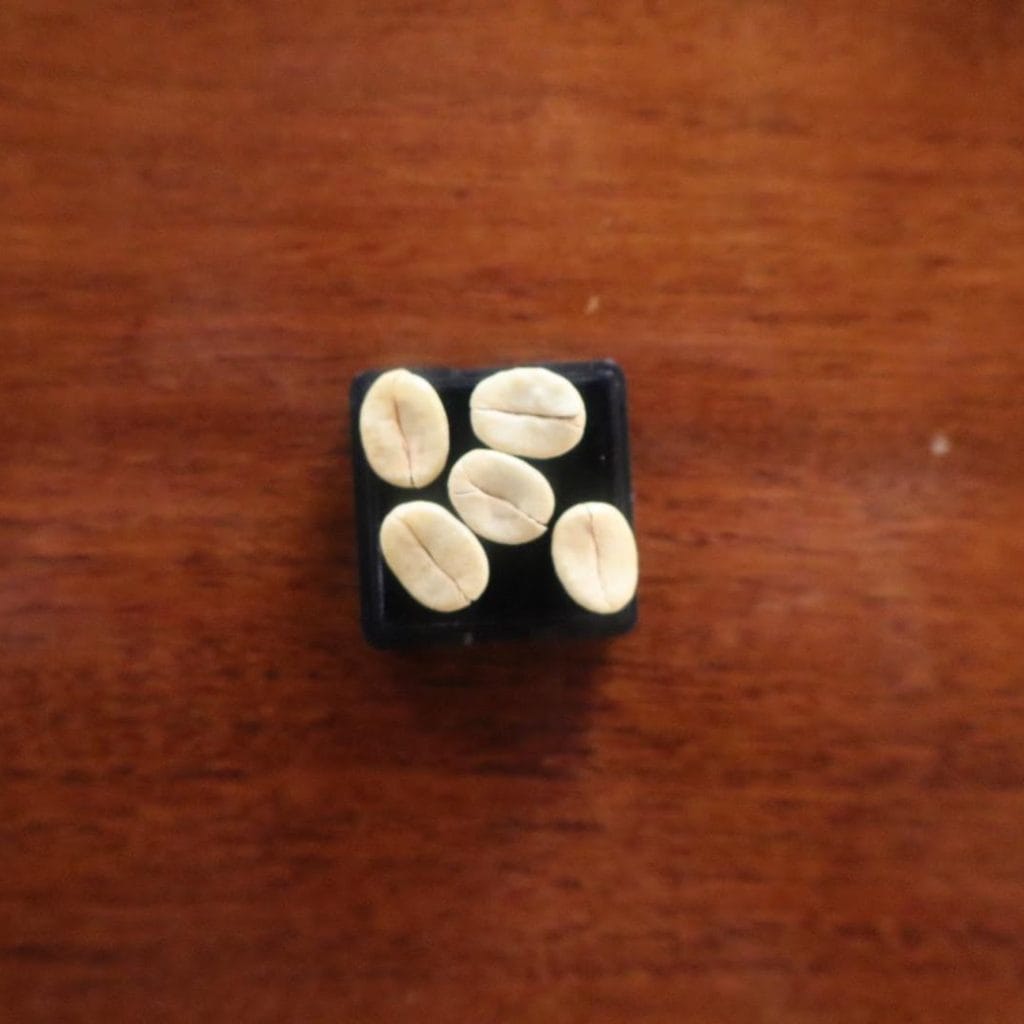
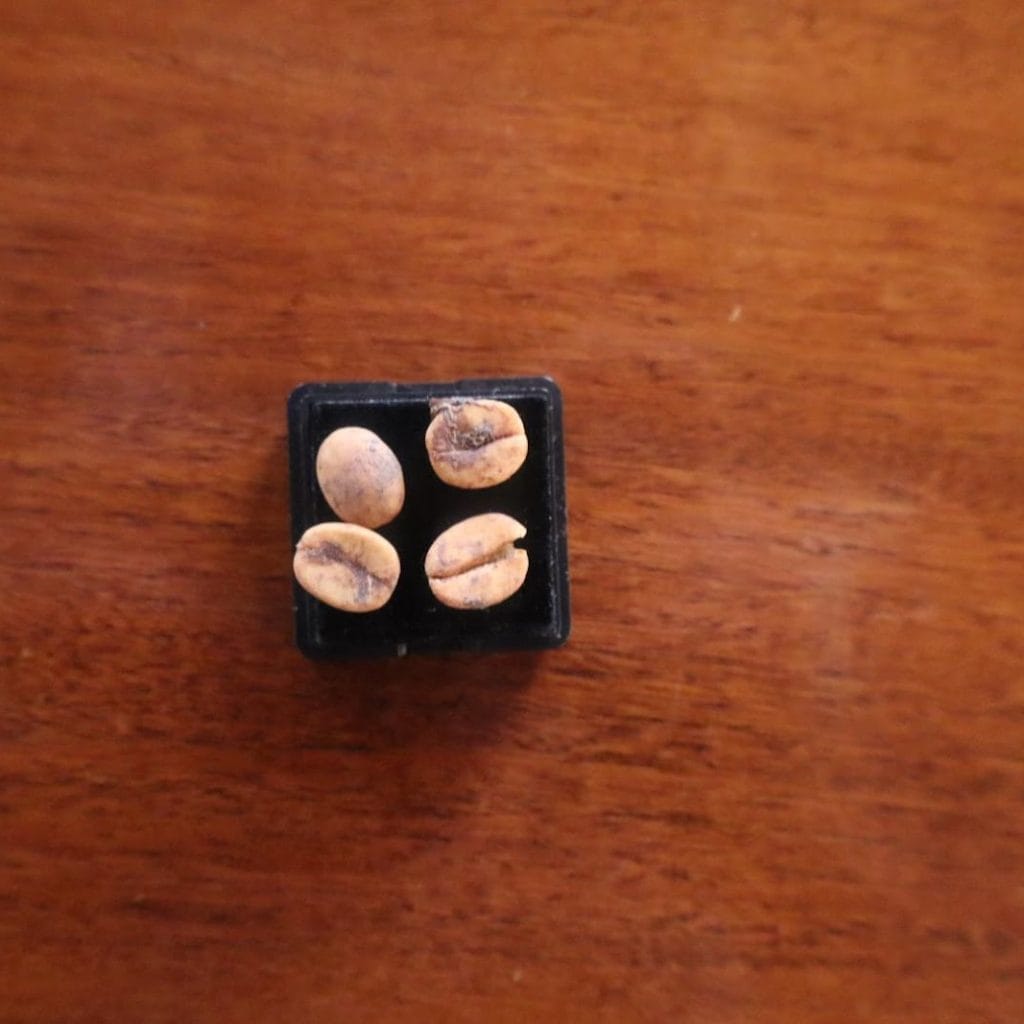
There are different processes that coffee can have. Today, we will access the three most common coffee processes. 

Anaerobic and Fermented Coffees

The natural method is the most common in Brazil for harvesting. The cherries are harvested either mechanically or by hand and laid onto patios to dry along with the mucilage coffee husks (sugars of the coffee cherry) and papyrus. It holds all the sugars inside the coffee pod during the drying stage of the coffee cherry and often results in a sweeter coffee. 

Washed coffee is also harvested mechanically or by hand, but instead of being dried it goes into a de-pulping station – more commonly known as washing. The washing station separates the sinker (ripe with more water) and floater (dry with less water) cherries. The cherries that sink are more ripe and mature which are then de-pulped. The washing station removes the husks and the mucilage, leaving only the bean and the papyrus. These beans are then laid in thin layers and naturally or mechanically dried.

Similar to the washed coffee, the sinker cherries go through the de-pulping station, but the mucilage is not removed. In Africa and Central America, often these coffees are fermented in tanks or in barrels before being dried. In Brazil, the honey process leaves the beans, with the papyrus and the mucilage which is dried mechanically or in patios. The tasting profile is clean and smooth.

This is the most modern and latest method of processing coffee. You can either add into anaerobic tanks, often water gallons or wine barrels to ferment the coffee with no entrance of air. Air exits the container via a decanter. Fermented coffee is often carried out in tanks, which are not necessarily sealed. In both cases, the sugars go through a fermentation process which adds a very boozy and fruity flavour which is different in the end product. You can ferment coffees that are naturally, washed or honey processed. You can also add, into the fermentation stage, yeast which also adds greater complexity. This is very common in Africa and Central America. Brazil is still learning how to scale up this process. 

After this, all the coffee is put to rest to create homogenous batches that are consistent in taste and moisture. This process varies from as little as 15 days up to 75 days. The taste will become uniform after the resting phase. Farmers can store them for up to a year in their siloes (or as they need to sell). Further processes after drying will come in future blogs – watch this space!  

WhatsApp-Image-2022-04-14-at-15.19.01-1

Weekly Coffee Report: Coffee Markets Continue To Be Disrupted.

Dear readers – coffee aficionados, coffee lovers,

I hope this message finds you well. Here comes another report about last week!

The coffee market continues to wander aimlessly. Like the last report, the coffee markets are being disrupted by new waves of communication, disruptive ever-changing technologies, changes in weather, lack of stocks and continued growth of coffee consumption. This has led the global economy to a complete global standstill and disorganisation caused by the COVID-19 pandemic, which has been aggravated by the Ukraine invasion by Russia.

The basics of the physical coffee market remain largely unaltered. Numbers released lately by the Brazilian Coffee Industry Association and the International Coffee Organisation (ICO) confirm that there has been growth of consumption – both in Brazil and worldwide. Yet, the global production of coffee, due to climate change, still has cause for concern. Current global stocks, as reported last week, are historically low. There are limited alternatives to consistent growth regarding re-stock of international global supplies.

Certified coffee stocks at ICE New York had fallen yesterday by 3,001 sacks. They ended last week on 1,077,178 sacks while a year ago there were 1,857,303 sacks – a fall of 780,125 sacks in a year. The uncertainties are due to climate uncertainties, lack of stock, high increase in consumption which results in a push and pressure on prices.

Yet, coffee is the most volatile commodity after oil which reacts to any news. This high speculative market is caused by traders who are not involved in physical markets. They only buy and shorten positions due to their short-term interests in the market itself, buying a minimum of 37,500 lbs per contract on the coffee market.

The ICO released a monthly report that informed that the global coffee market will register a deficit of 3.1 million sacks on the crop of 2021/2022 (from October to September). Already, in Brazil, the largest coffee producer of Arabica beans had a smaller crop in 2021. The ICO has forecasted a global coffee production of the year 2021/2022 at 167.2 million 60kg sacks – a decrease of 2.1% compared to the previous year. The consumption of coffee forecast is 170.3 million 60kg sacks – an annual growth of 3.3% (Source: Reuters).

Up to the 8th of April, shipments out of Brazil were 11,039 sacks of Arabica beans, 7,959 sacks of Robusta beans and 17,074 sacks of instant coffee – totalling 36,072 sacks. This is a decrease compared to the same day in March totalling 43,472 sacks. Up to the 8th of April, requests for certification of coffee origin for the month of April totalled 217,893 compared to 442,878 sacks on the same day in the month of March. Hence, this clearly shows that there have been fewer coffee beans shipped out of Brazil in April compared to March.

The New York Stock Exchange closed on Friday with an increase of 325 points – combining at around 233 USD/lbs – this was an increase compared to last week of about 5 USD per sack. Currency exchange between USD in BRL means that type 6 coffee in Brazil would cost BRL 1,410 while on Friday, 8 April, it cost BRL 1,442 which clearly shows a growth trend.

New Coffee Arriving

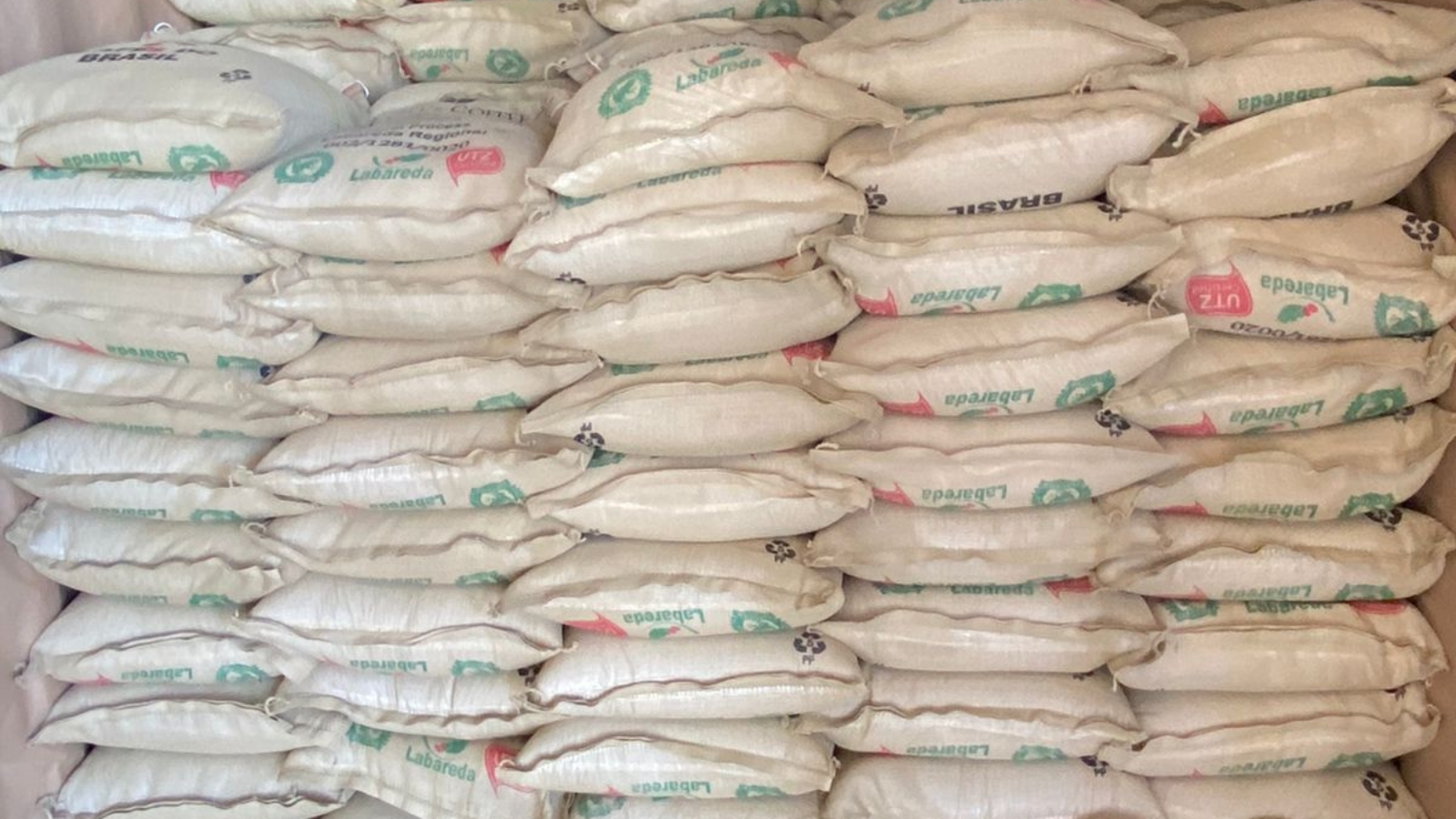
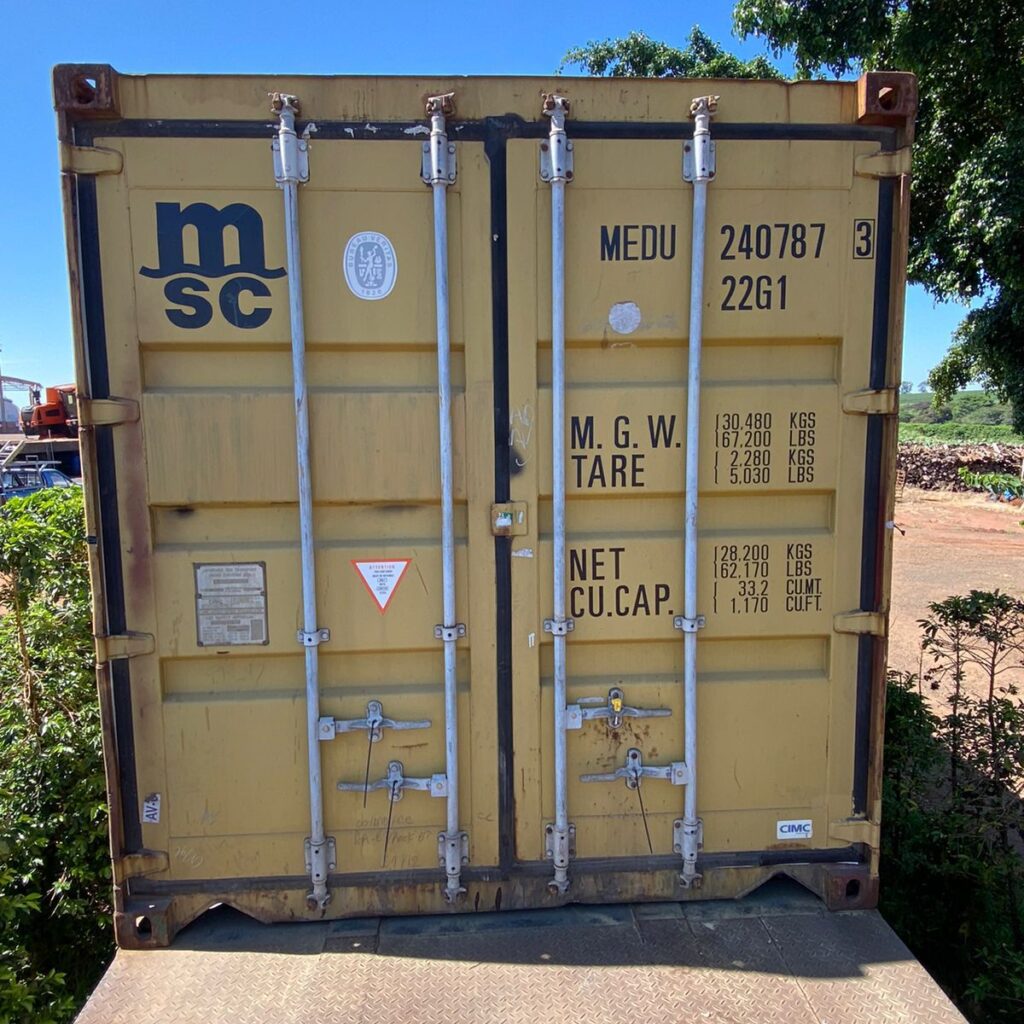
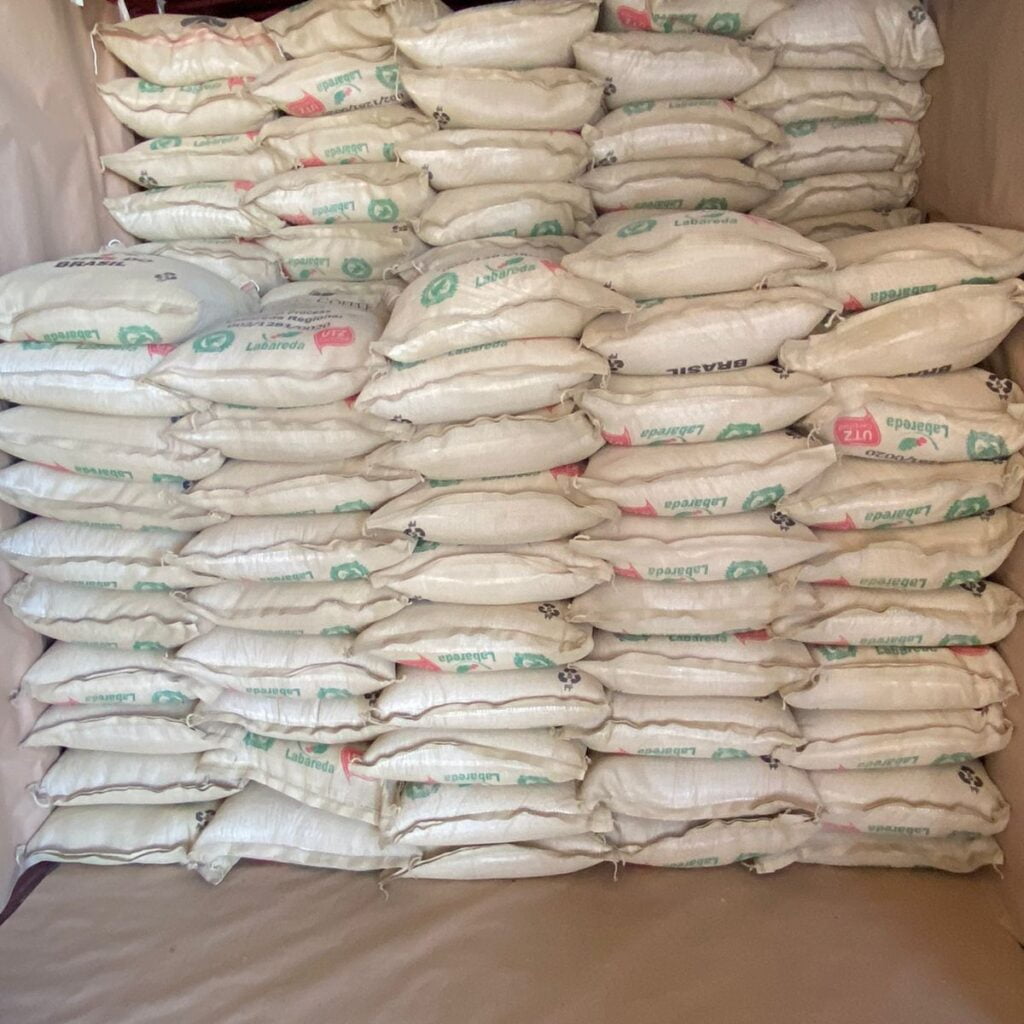
Our new container of coffee is now on the way to the UK.

Thank you!

Calum

WhatsApp-Image-2022-04-06-at-16.39.53

Weekly Coffee Report: London Coffee Festival & Fluctuating Markets.

Hello, coffee aficionados and coffee lovers.

Apologies for being out of the picture in the last few weeks. We’ve been busy recently, we attended the London Coffee Festival, and the world has been changing in the last couple of months – disruptive technologies, the war in Ukraine, climate change, extremely low number of stocks globally and myself sourcing and procuring more coffee has captured my attention in the past two weeks. This report will be based on last week (Friday 1, April) and hopefully, bring us updated and back to our routine of weekly reports as we should have another one released over the weekend as well! 

Overall, in this last week, we have had gridlock coffee negotiations which was been quite challenging for the coffee industry. On Monday, coffee contracts at ICE Futures US in New York retreated quite considerably. After Monday, the prices were on a trend upwards – on Friday 1st of April, they reached their maximum of USD 2.3040 – an increase of 200 points. By the end of the day, the price slightly retreated, closing at USD 2.2840, for the contracts starting in May. On Thursday, there was an increase of 455 points, yet on Monday there was a drop of 730 points. Overall, across the week, the market has increased by 655 points. Yet, compared to the previous week, the market had increased by 180 points. This showcases that the market trends combined with strong consumption and the current shortage of stocks have been pushing the prices up.

Nonetheless, investment funds that buy and sell coffee contracts have shortened their positions in the market itself which alleviates the pressure on price rises while monitoring the forecast of Brazilian crops for 2022 and 2023. The International Coffee Organisation (ICO) had forecasted a growth of 3% in 2021/2022 with coffee consumption being around 170.3 million sacks of 60kgs. COVID-19 has brought worries to the coffee market as the demand is outstripping the supply. Yesterday, ICO released information that there was an actual reduction of coffee exports by 0.8% between October 2021 and February 2022. Brazilian rainfall season has started to ease off in the southeast of the country in March. This decrease has been below the historical averages for the month of March, though this is much better than the last two years.

The stocks of certified coffee in the coffee market in New York have increased by 4726 sacks compared to last Thursday last week which is currently sitting at 1,084,842 sacks. A year ago, this amounted to 1,845,586 sacks – a drop of 760,744 bags. The USD compared to BRL has depreciated, the USD fell to the lowest recorded year (in the last two years) compared to the BRL which is currently valued at 4.7 BRL to 1 USD. This is quite negative as Brazil is the second-largest coffee consumer market in the world and there are less incentives for producers, exporters, brokers, and traders to export coffee. Hence, this has brought down the pressure on prices at origin. Coffee prices have dropped as the USD has dropped. Nonetheless, this might be inflated due to investors moving out of funding commodities in Russia and Ukraine which is now being funded in Brazil instead. With a greater influx of foreign direct investment, there will be a greater increase in BRL value.

The Brazilian market itself has been quite quiet as producers are reluctant to sell their coffee with a forecast set to increase. Up to the 1st of April, the March shipments included 2,781,704 sacks of Arabica beans, 111,555 sacks of Robusta beans and 292,635 sacks of instant coffee – totalling shipments out of Brazil at 3,185,894 sacks. This is an increase compared to the total amount of 2,622,540 sacks on the same day in February. Up to the 1st of April, the requests for certificates of origin had totalled 3,786,284 sacks compared to 3,362,564 sacks on the same day last month.

Thank you very much for the read – I hope you have a lovely week! Calum

Weekly Coffee Report: Impact of The Ukraine Crisis

Here’s another report dated from last week, Friday, 11 March 2022. The war on eastern Europe of invading Ukraine, caused by Russia, continues. We still have investors who are frightened, and the current market is completely lost and disorientated. It is impossible to evaluate the damage insured in a short, medium, and long-term context in the global as well as the Brazilian economy.

Coffee quotations on the ICE Futures US in New York returned to be quite varied with many ups and downs. At the end of the week, the market closed on a downturn. Analysts talk about the increase in energy prices, caused by the Russian invasion which may destabilise and derail the global economy. This downturn in the economy could cause consumers to reduce their consumption and spending on coffee – bringing a lower average of consumers as they tighten their belts and limit their visits to restaurants and cafés. In our opinion, most coffee farmers won’t harvest for a higher 2-year cycle for 2022 due to huge droughts that occurred in the second half of 2020 and two major frosts in July. This only ended with the beginning of the rains in November 2021. This has brought a lot of concerns to coffee producers in Brazil and has substantially decreased the 2022 crop forecast.

Brazilian giant oil and gas company, PETRONAS, has announced an increase in diesel prices of 24.9% in Brazil. Energy and electricity prices went up last year. The prices of fertilisers, which already started increasing this year, have now skyrocketed. The market has already seen inflation at a minimum of 7% while the SELIC, run by Brazilian journal, Estadão, forecast a minimum of 14%. It is not by mistake that most coffee producers in Brazil have refused to sell their current stocks at the offered prices lately and are instead holding their stocks.

Coffee contracts of ICE Futures in New York had another week of devaluation and closed on Friday, 11 March, with a fall of 225 points (USD 2.2195 per pound). On Thursday, they decreased by 510 points. This week’s balance sheet drop was by 230 points. Last week, the fall altogether was 1440 points. As always, the USD compared to BRL has fluctuated with its ups and downs. Last week, there was a small appreciation of 0.74% where one USD could buy BRL 5.0540. In BRL, low level commodity sacks have been negotiated by BRL 1483.83, compared to the previous week at BRL 1487.90. Two weeks ago, on Friday, they closed at BRL 1506.33.

On Friday, last week, the offers of the buyers were kept at bay as most of the suppliers and producers kept themselves out of the market. The Brazilian physical market has been slow with little business negotiated as the market essentially stopped. On Thursday, the international stocks of certified coffee on the ICE New York, increased by 5,712 bags. They concluded last Thursday at 1,027,688 bags while a year ago they concluded at 1,836,918 bags so there was a drop of stocks by 809,230 bags.

CECAFÉ, Brazilian Agreement of Exporters, released a report that last month in February there were 3,440,963 sacks of 60kg of coffee – approximately a drop by 13.7% (approximately half a million sacks fewer than the same month in 2021). Yet, there were 1.6% more than the previous month of January. There were 3,016,441 sacks of Arabica coffee and 129,809 sacks of Robusta, totalling 3,146,250 bags of green coffee, which added to 291,746 bags of instant coffee and 2,967 bags of roasted beans, totalling altogether 3,440,963 sacks.

Up to the 11th of March, the shipments exported from Brazil were 438,226 sacks of Arabica coffee, 18,399 sacks of Robusta beans, 36,373 bags of instant coffee, totalling 492,998 bags, against 569,399 bags on the same day in the month of February. Up to the 11th of March, the requests for certified of origin totalled about 1,065,683 sacks against 1,122,878 sacks on the same day in the previous month.

We look to the beginning of the week, with Monday the 14th and Tuesday the 15th of March with further losses on the coffee market. This is due to decreasing prices caused by the war in Ukraine which keeps pushing the prices down with fear of high inflation and squeeze on consumer purchasing power. Our forecast is that the price will go up until Easter due to the basics of the global economy. Though, the war in Ukraine has shaken this up a bit. If we start seeing the beginning of the harvest at the end of April/beginning of May then we will see that prices will ease further, subject to major catastrophic climate disasters in Brazilian wintertime. Hopefully there will be more price stability with a peace agreement between Russia and Ukraine. We hope that Brazil will manage a successful harvest during the summertime in the northern hemisphere and we can start to have a bit more stability in the nearby future.

I wish you all the very best!

Thank you very much,