Weekly Coffee Report: Impact of The Ukraine Crisis

Here’s another report dated from last week, Friday, 11 March 2022. The war on eastern Europe of invading Ukraine, caused by Russia, continues. We still have investors who are frightened, and the current market is completely lost and disorientated. It is impossible to evaluate the damage insured in a short, medium, and long-term context in the global as well as the Brazilian economy.

Coffee quotations on the ICE Futures US in New York returned to be quite varied with many ups and downs. At the end of the week, the market closed on a downturn. Analysts talk about the increase in energy prices, caused by the Russian invasion which may destabilise and derail the global economy. This downturn in the economy could cause consumers to reduce their consumption and spending on coffee – bringing a lower average of consumers as they tighten their belts and limit their visits to restaurants and cafés. In our opinion, most coffee farmers won’t harvest for a higher 2-year cycle for 2022 due to huge droughts that occurred in the second half of 2020 and two major frosts in July. This only ended with the beginning of the rains in November 2021. This has brought a lot of concerns to coffee producers in Brazil and has substantially decreased the 2022 crop forecast.

Brazilian giant oil and gas company, PETRONAS, has announced an increase in diesel prices of 24.9% in Brazil. Energy and electricity prices went up last year. The prices of fertilisers, which already started increasing this year, have now skyrocketed. The market has already seen inflation at a minimum of 7% while the SELIC, run by Brazilian journal, Estadão, forecast a minimum of 14%. It is not by mistake that most coffee producers in Brazil have refused to sell their current stocks at the offered prices lately and are instead holding their stocks.
Coffee contracts of ICE Futures in New York had another week of devaluation and closed on Friday, 11 March, with a fall of 225 points (USD 2.2195 per pound). On Thursday, they decreased by 510 points. This week’s balance sheet drop was by 230 points. Last week, the fall altogether was 1440 points. As always, the USD compared to BRL has fluctuated with its ups and downs. Last week, there was a small appreciation of 0.74% where one USD could buy BRL 5.0540. In BRL, low level commodity sacks have been negotiated by BRL 1483.83, compared to the previous week at BRL 1487.90. Two weeks ago, on Friday, they closed at BRL 1506.33.

On Friday, last week, the offers of the buyers were kept at bay as most of the suppliers and producers kept themselves out of the market. The Brazilian physical market has been slow with little business negotiated as the market essentially stopped. On Thursday, the international stocks of certified coffee on the ICE New York, increased by 5,712 bags. They concluded last Thursday at 1,027,688 bags while a year ago they concluded at 1,836,918 bags so there was a drop of stocks by 809,230 bags.
CECAFÉ, Brazilian Agreement of Exporters, released a report that last month in February there were 3,440,963 sacks of 60kg of coffee – approximately a drop by 13.7% (approximately half a million sacks fewer than the same month in 2021). Yet, there were 1.6% more than the previous month of January. There were 3,016,441 sacks of Arabica coffee and 129,809 sacks of Robusta, totalling 3,146,250 bags of green coffee, which added to 291,746 bags of instant coffee and 2,967 bags of roasted beans, totalling altogether 3,440,963 sacks.

Up to the 11th of March, the shipments exported from Brazil were 438,226 sacks of Arabica coffee, 18,399 sacks of Robusta beans, 36,373 bags of instant coffee, totalling 492,998 bags, against 569,399 bags on the same day in the month of February. Up to the 11th of March, the requests for certified of origin totalled about 1,065,683 sacks against 1,122,878 sacks on the same day in the previous month.
We look to the beginning of the week, with Monday the 14th and Tuesday the 15th of March with further losses on the coffee market. This is due to decreasing prices caused by the war in Ukraine which keeps pushing the prices down with fear of high inflation and squeeze on consumer purchasing power. Our forecast is that the price will go up until Easter due to the basics of the global economy. Though, the war in Ukraine has shaken this up a bit. If we start seeing the beginning of the harvest at the end of April/beginning of May then we will see that prices will ease further, subject to major catastrophic climate disasters in Brazilian wintertime. Hopefully there will be more price stability with a peace agreement between Russia and Ukraine. We hope that Brazil will manage a successful harvest during the summertime in the northern hemisphere and we can start to have a bit more stability in the nearby future.

I wish you all the very best!

Thank you very much,

Webp.net-resizeimage (9)

Weekly Coffee Report: Price Of Coffee Remains Strong.

Hello dear coffee aficionados, here is our fifth report of 2022!

The ICE Futures New York Commodity Exchange have had another week of many ups and downs. On Friday, the highest price was 2.444 USD/lbs, while at the end of the day it ended on 2.4185 USD/lbs with a decrease of 205 points. Last week, the total price change was up by 595 points, an increase of 2.87% in prices. Altogether, in 2022, the price had gone up by 1575 points.

We still believe that the basis for the rise of coffee prices remains strong with the limited amount of green coffee supply and logistics issues. The great amount of rain in Brazil brings hope for traders and brokers for a greater crop in 2023. Yet, the high inflation and gridlock logistics provide reason for concern as well as heightened uncertainties regarding the weather, altogether putting pressure to increase coffee prices.

Following the next release on the currently ICE New York stocks, its more evidence on the decrease amount of coffee in stock internationally. On Thursday, 23,814 sacks went down of commodity certified coffee compared to the decrease of 16,000 from the same day last year. Currently, the stocks of certified coffee totalled 1,110,084 sacks compared to a year ago which was 1,638,515 sacks. During a year of trade, the current stocks in New York of certified coffees decreased by over half a million sacks.

Another coffee-producing country that is showing concerns for the market is in Colombia. The second-largest Arabica beans producers had registered a downfall of 20% of their crop during the month of January. Last month produced 868,000 sacks of 60kg, contrasted to the 1.1 million produced a year ago in 2021. The Brazilian market has been quite solid throughout the week with almost no business taking place. The buyers started to increase their offer but are still limited with volume orders – in other words – buyers slightly increased their bidding price for coffee, but farmers are only selling coffee when needed.

Up to the 3rd of February, shipments from Brazil were at 2,516,260 bags of Arabica beans, 88,193 bags of Robusta beans and 280,970 bags of instant coffee – totalling an export amount of 2,885,423 sacks. Compared to the same dates in December they were 3,387,495 sacks. compared to the same date last year’s total of 4,100,133 sacks.

Altogether, we have noticed the increase in prices and how the ICE keeps on pushing the prices up. There is added pressure due to the shortages of supply from Brazil’s 2022, yet positive climate news regarding more rain may bring a little ease of pressure on the upcoming markets in 2023.

All the best,

Calum

WhatsApp Image 2022-02-02 at 20.41.23

Weekly Coffee Report: Coffee Market Finds Balance

3/2/2022

Dear all coffee aficionados, coffee lovers, coffee roasters and anyone who spares ten minutes to read our coffee report – I hope you find it useful.

Last week, the coffee market showed many ups and downs in the New York commodity exchange. The New York Stock Exchange ISE Futures, contracts were on an upcycle for most of the day with the maximum value reaching 2.3790 USD/lbs and the minimum value at 2.3030 USD/lbs at their lowest rate.

Update

Overall, there was balance throughout the week. During the fourth week of 2022, after all of this, there was a decrease of 200 points on the commodities exchange market for coffee. Last week, during the third week of 2022, there was another 175-point decrease. However, during the second week of 2022, markets went up by 120 points and during the first week, there were gains of 1235 points. Overall, coffee has accumulated gains at 980 points by the end of the first month of 2022. Coffee contracts ending in March 2022 are valued at 2.2610 per pound. We continue with our belief that market trends are on the up as there are shortages of green coffee beans. This reflects short-term speculation and regulation of the market itself by operators who can buy and sell coffee futures contracts.

Nevertheless, the rains from the Brazilian summertime have brought hopes for brokers and coffee people that the upcoming 2023 harvest will be plentiful – all that is needed to increase the coffee stock ICE. However, there are still shortages of people offering to sell green coffee on spot. There are worries about the Brazilian production downturn and the global supplying issues that occurred in 2021 such as logistics, backlogs, COVID-19, weather irregularities, low stocks, high costs for fertilisers, agriculture defensives, and inflation overall in the Brazilian market.

At the same time, the Brazilian market itself has not been operating as much due to most coffee farmers putting less of their crop of 2021 on sale in 2022. There are few buyers starting to make bids at the asking price that coffee farmers are asking for hence there is very little movement occurring in the physical Brazilian coffee market. Stocks of ICE certified coffees in New York are at 1,280,626 sacks while a year ago there were 1,618,809 sacks – a drop by 331,000 sacks.

The Brazilian president has approved the budget for 2022 which has brought good news for coffee farmers. FUNCAFÉ, a fund allocated to defend struggling coffee producers, had increased its value by 1.7% compared to the previous year. This was due to extensive lobbying by coffee farmers in need of greater government assistance needed due to the frost in 2021. This FUNCAFÉ is valued at 1.2 billion USD and 6,079,685,650.00 BRL.

Good News

Following the reports of the Brazilian Coffee Association of Industries, instant coffee exporters had exported their coffee to 98 countries from Brazil in 2021. This has amounted for over 4.09 million sacks of 60 kg. This is a historical record compared to 2020 where there’s been an increase of 0.6% of 4.07 million sacks. Up to the 27th of January, the shipments from Brazil abroad of coffee had totalled 1,547,596 sacks of Arabica beans, 35,117 sacks of Robusta beans and 211,060 sacks of instant coffee. This totals to an amount of 1,793,773 sacks shipped out of Brazil compared to 2,207,546 sacks on the same day in December. Up to the 27th of January, requests for issuing certificates regarding orders of origin for the month of January had totalled 2,844,171sacks compared to 3,493,896 sacks on the same day of the previous month.

Thank you very much for reading our report,

All the best,

Calum

222035701_1222777294837455_8913061957266874193_n

How Frost Has Impacted Brazil’s Coffee Farmers.

This report will not be focusing on the historical frost of 24/07/2021. As the market assesses the damages and coffee farmers lobby the Brazilian government for help, the market coffee on spot marketplace will offer unseen high prices for a while. This report will show the principles behind the price rise trend before the impact of the frost:

1st the pandemic impact on the farmers; the fear of lockdowns and retail industry closing doors such as roasteries and cafes made farmers hedge part of their future crops at cooperatives at prices at U$D 1.2 – 1.3 cents per lb weight.

2nd the drought of October, November and early December 2020 pushed again prices up. Farmers that have not hedged before, were again attracted to close future contracts delivering coffee to cooperatives. By price climbing to U$D 1.6 – 1.75 cents per lb coffee producers seems to become eager to hedge a small share. Yet to wait as the market forces finally strengthen the coffee producer position that had installed irrigation.

3rd Stock Levels of green coffee at consuming countries such as USA, Japan and Europe are at a historical low level on the beginning of 2021. After a Nestle reports that regardless of the lockdowns Nestle coffee consumption growth organically at 3.5 %. The demand of coffee only went from cafes to home brew during the pandemic.

4th Logistics and infrastructure bottlenecks in the global trade supply of containers also damages the supply flow of coffee. ON the 23rd of March Ever Given blocked the Suez Canal leading to major ship congestion in major ports such as Rotterdam, Kilindini Harbour – Mumbassa, Djibouti Ethiopia container shortage and New Orleans, LA. Staff shortages affecting harvest and farm labour to major shipping lines. All together with major strikes in Colombia’s major docks proved that 2021 shipping containers were more challenging than ever.

5th Vaccination programmes in the US and Western Europe drives consumption back to new heights. Cafes, restaurants, hotels, retail, and major roasteries start to place new orders and search for contracts. The rise in demand however will be halted by a strong frost on the 24/07/2021. Pushing prices over the U$D 2.00 cents per lb. making commercial coffee the prices of low-grade specialty coffee beans. Rates not seen since 2014.

The impact at origin of the frost will be assessed at the next post. This post offer context and highlight the structural challenges the coffee supply has gone through in the last 24 months. Large commercial roasters that are orientated on low prices will have a more challenging picture that those roasters focused on quality in the next months.

Supposably, the coffee prices continue to increase we should be put in perspective. Many farmer’s objective is to achieves NY futures prices. But what if the prices reach U$3.00 cents per lb? Roasters would be paying about U$4 – U$5 cents per lb. resulting on a coffee bag being sold at U$660 for 60kg sack (farmers getting U$D 400 per 60kg sacks), or £510 for green coffee. £10 per kg on green coffee (already discounting the 15 % weigh loss). The pass on charges will be passed on to the café, or retail. A café that sells a cup of coffee at £2.5 can extract some 50 cups for each kg. making £125 per kg.

pexels-burst-374757 (1)

Introduction To Our Coffee Reports

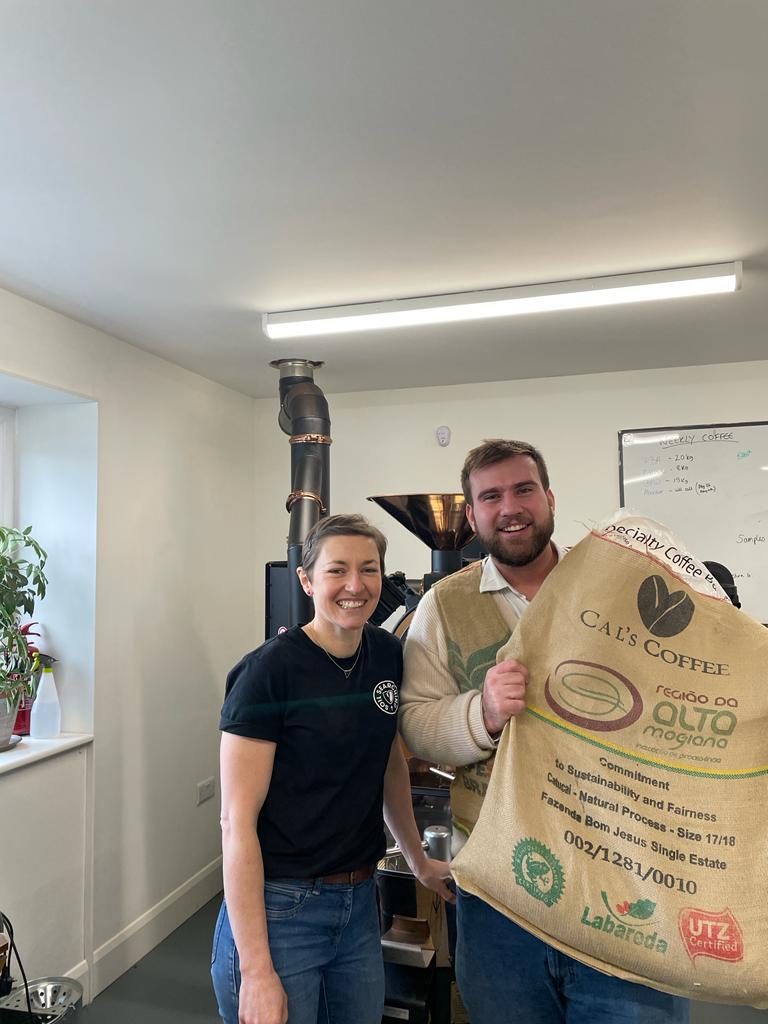
This is the first of a weekly informative and trend-based report focused on all Coffee. It will be written by Calum Maciel Brough – founder of Cal’s Coffee – UK-based green coffee importer and distributor.


The report will be based upon coffee data gathered from sources in Brazil, such as Globo Rural, Escritorio Carvalhaes, ABIC, Canal Rural, Revista Rural. This will be combined with information from the International coffee association, ICE Coffee futures trends and reports, other importers sources and major Brazilian cooperatives such as Cooxupe and Cocapec.

Finally, the most important sources of Cal’s Reports will be the farmers family in the Alta Mogiana region; Paulo Ribeiro Maciel, Fernanda Maciel Raucci and Felipe Maciel Raucci; together with data shared by larger coffee producers such as Gabriel Oliveira senior and his son Gabriel from Bom Jesus aka Labareda.


The outcome of the report is to share what is happening in the grounds of Brazil, by the farmer’s view. To inform trends and coffee facts to all enthusiasts, coffee shops, roasters and all people interested in discovering the coffee industry. As Cal’s is based between the UK and Brazil these two will be the focus to most of the reports.

Mundo Novo variety

Effects Of Coronavirus On Brazilian Coffee Farmers.

First of all, yes, the situation in Brazil is very serious. I wish to share the feedback I am getting from my relatives in Brazil both farmers and city folk alike. Brazil is made of 25 states and the capital district and each state reacted differently. Sao Paulo state where all our farms are located was the first state to have cases, went in lockdown and is trying to be under control.

The drop in Specialty Coffee shops and it’s demand.


I received from both my coffee growing aunt’s Fernanda and Rita a message that the coffee consumption worldwide went up by volume, during the early lockdown. However, the worldwide stockpile of roasted coffee in chains like Starbooks, Pret Organic, Costa and others was felt by larger coffee farms and cooperatives that have access to those markets. Gabriel son, my close friend told me in the begging of lockdown 2nd week of March, how Australia was being affected. (Gabriel son, from Bom Jesus farm has a direct trade relationship established in Ozzy land). The farms that had access to Nestle, Illy, Lavazza, Stockler/InterAmerica, large cooperativees – like Cocapec, Cooxupe, have successfully sold the residuals of 2019/20 harvest to them.

The Exchange rate and Coffee farmers


The clearest impact on the day to day life os farmers was the spike in the U$D to the Brazilian currency R$ (Reais) on the months of March to May. It allowed the coffee prices for commodity type coffee to sit at a decent price for the farmers. The Farmers that at the time closed future contracts – agreed with buyers to sell their coffee in the future closed great coffee businesses. However, in June as the New Harvest 2020/21 arriving and USA manifestations started the great fall performed by the U$D and dragging the overall commodity coffee prices down.

Forecasts, New harvest and staff during COVID-19


The need for speciality market and direct trade will be exposed on the coming months. The harvest carried on in Brazil and most staff managed to carry on their tasks with self-isolation measures. The quality of the coffee is being truly remarkable. Yet the traditional exodus of farm workers moving from region to region looking for jobs in farms that do not have a fixed staff was completely stopped. As the government is subsidising their wages, with a universal benefit. What used to take 3-4 months to finish harvest might be extended for 5 months of harvesting, going up to mid/end of August. What might mean an over supply of great quality coffee when the world is exiting lockdowns in September. To keep paying the farmers independently from the fluctuating and volatile coffee markets the need for transparency and traceability will be highlighted by the world post- covid-19.

cal cupping

Why some Coffee brands are synonymous of quality and others are not.

Why some Coffee brands are synonymous with quality and others are not.

Today I just had a coffee that was simply not right. But have you ever thought why some brands are seen as better than others? Illy > Nescafe, Lavazza > Kenco, Taylors > Aldi coffee.

Brands such as Illy, Lavazza, are a traditional offer as synonymous of quality of coffee in the European continent and compared to instant coffee. That in some cases add flavours in an attempt to improve flavours. Yet the quality benchmark established from Illy is being passed by current medium and large independent roasters such as Caravan, Squire Mile or Unio Hand Roast.

What some brands do that enable them to captive the public attention? Most important is their understanding over the complexity in coffee. From the seed to the raw coffee (green bean). The same coffee with same flavour and characteristics can be distributed and traded in different ways. Most Brazilian farmers have at least the first set of dry mills machinery (Beneficio in Brazilain Portuguese) that simply remove the husks and skins.

But with the full set of dry mills machinery at the origin warehouse we can separate the same batch of coffee in 7-9 different sizes that can be traded for different markets. In the Middle East most coffee sold to consumers are roasted and grind very fine so the smaller beans size 12&13 from Brazilian producers is sold to that market. Illy in Italy often buys 14&15 sizes as it is relatively consistent to roast, you can buy quality at accessible price and Illy than grinds for consumer or buys larger sizes to supply roasted cafes.

The 4th Wave orientated by Australians and New Zealanders seek the bigger beans and flavour and is the root Independent roasters in the UK are doing. Bigger beans are more appealing, more expensive and easier to roast as it is more consistent. But most Brazilian coffee is sold 16 up which is about 40% of the Brazilian crop, we bring 17& 18 sizes which is only 20 % of the crop produced by farmers.

We must see that the good thing in coffee is that all coffee can be used and there is little waste when each different bean is used to different things.

We only work with the best farms in Brazil, from award winning coffee to humble farmers who are new to the scene. We try and bring great coffee to the masses and put a little bit if extra income in the farmers pocket.

If you would like to some of our wholesale prices for our Brazilian speciality coffee, get in touch here.

Coffee_beans_being_sorted_and_pulped

What are coffee defects?

What are coffee defects? (And why the affect your cup of coffee!)

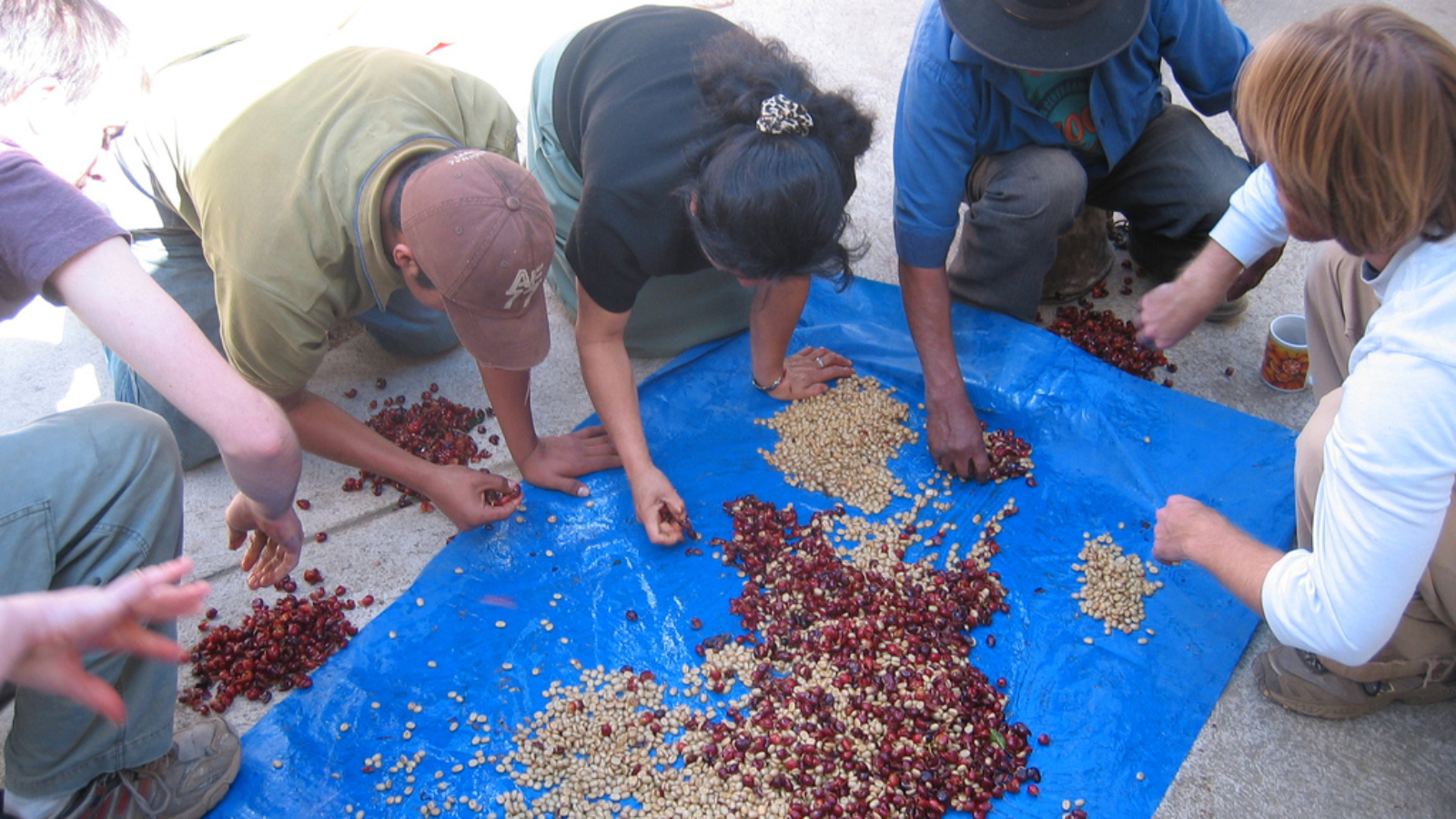
There are about 18 different categories of coffee defects; but  when I was working at Bom Jesus farm I catalogued about 11 of the most important:

1st. Parchment it is when the coffee bean is involved in a layer of outer skin just like in a parchment, the dry mill should have cleaned the bean, but a bean wasn’t processed correctly.

2nd. Sour bean a healthy bean has been fermented either on the tree or on the drying stage without intention. The sour bean taste like medicine. It should be removed by colour scanning machinery.

3rd. Black bean this bean was genetically badly formed. Unpleasant taste. It should be sieved by the colour scanning machinery.

4th. Pink bean the pink bean in Brazil is one of the less common defects. But yet is a badly fermented bean and its density makes it easier to be removed by machinery.

One of the farmers at Sao Lucas making sure to keep defects to a minimum.

5th. Pod, or Cherry this is a dry mill process failure for a pod to arrive in a coffee sack in the UK from Brazil it means the 5 machines that should have sorted out the bean failed in their tasks.

6th. Small husks, stones, residuals, in a 30 kg of the best speciality coffee cupping SCA score 85 is still accept some residuals, still very unlikely. As most dry mills stages target the removal of any impurity. But coffee is a natural product and variants can occur.

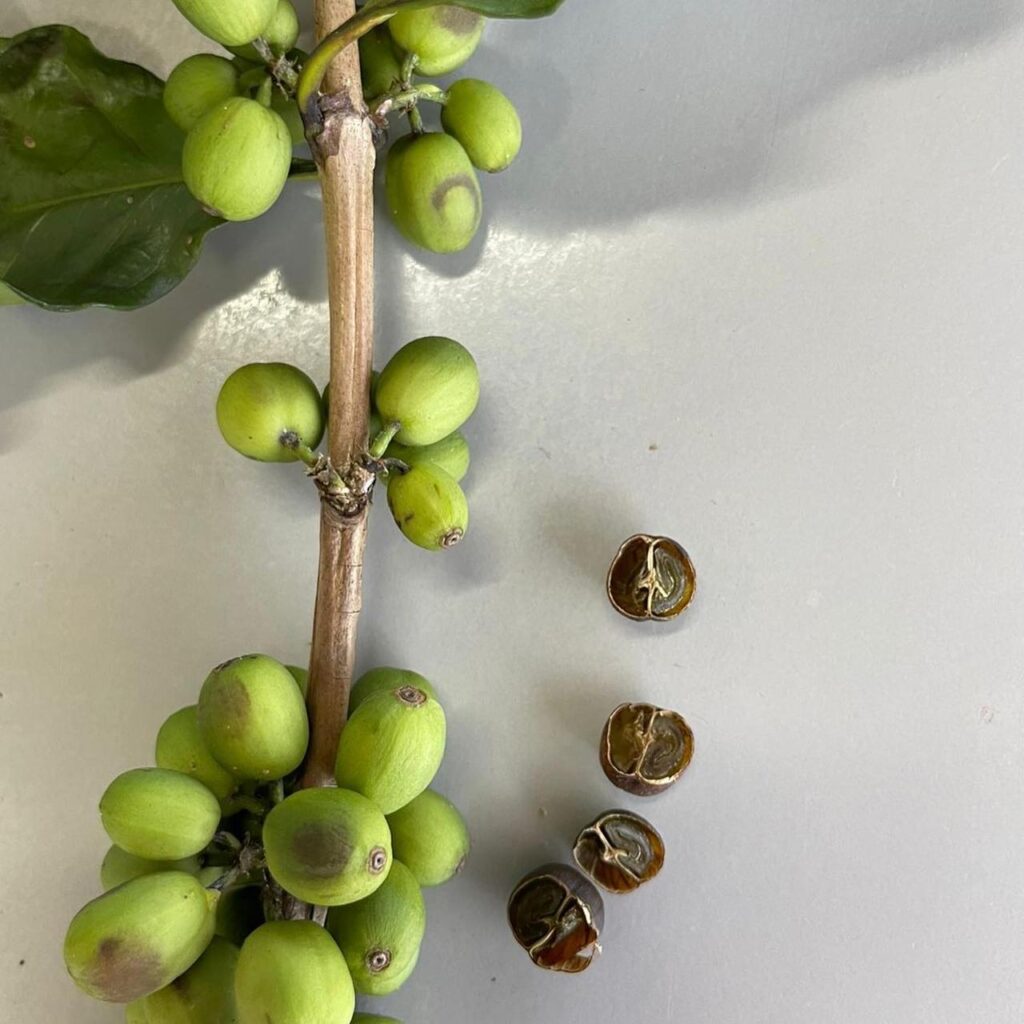
7th. Insect damaged beans it occurs by badly management farming practices. It should be sieved by the density machinery but disappear once is roasted but taste is unpleasant.

8th. Fungus damaged bean coffee bean that suffered from rainfall during the drying stage. It taste like rubber. It should be removed by colour scanning machinery.

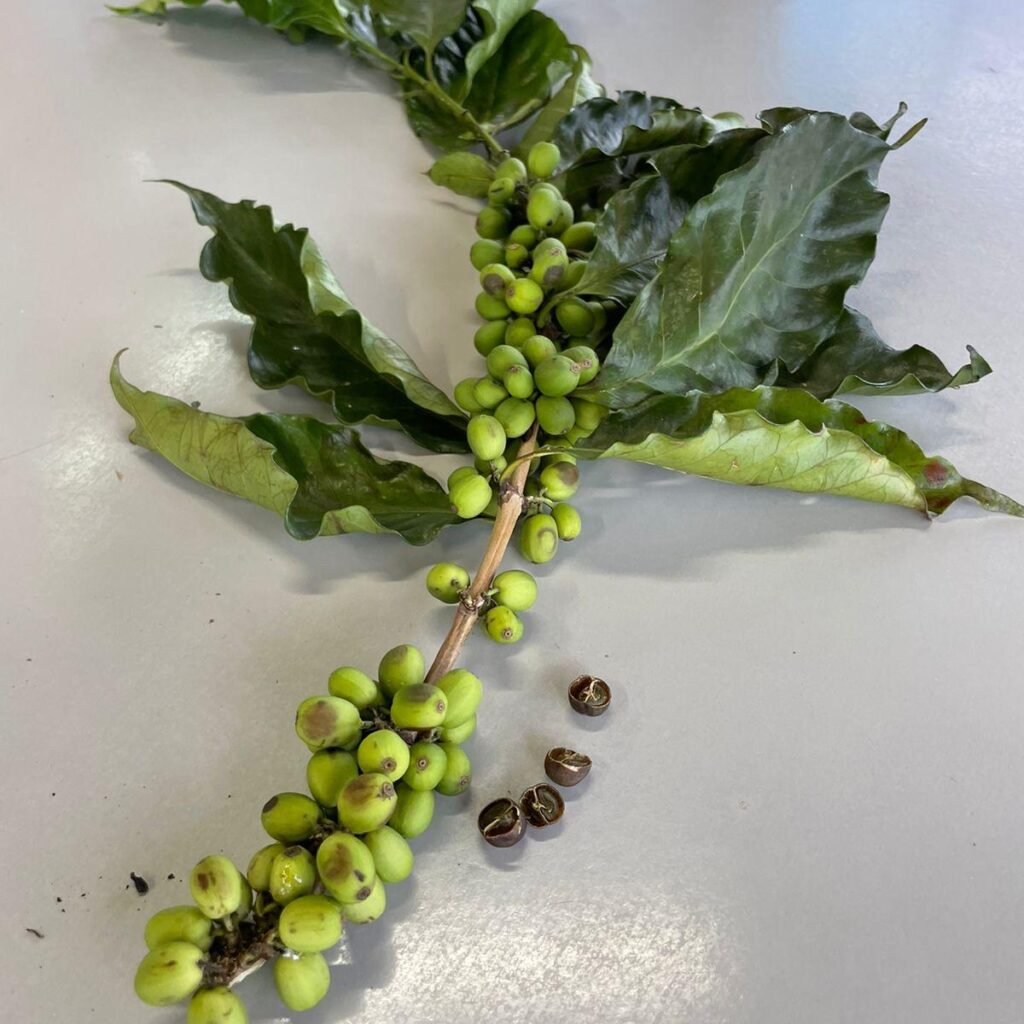
9th. Unripe bean is a bean that been too early harvested and never got to the right maturation level. Size, density and colour sorting machinery are responsible to sieve them out. After roasted looks like a quacker but taste much worse. The palest bean

10th. Floater beans most common defect in natural coffee beans. It is the beans that density and genetics simply is variant than standards. After roasted turns into lighter brown colour than most. Its characteristics it floats in water even if at the right maturity level. It is difficult to remove through machinery; most are removed in the density selection stage.

11th.  Shell, or broken beans very common defects the shell are big beans that in the roastery after the first crack are likely to split. It does not affect much the flavour and is a varietal genetics problem. Sorting should remove most of these defects.

I have made a PDF which  details defects you can find in most coffees. Downlaod HERE.

As always, if you want to order great coffee with no defects please get in touch for our wholesale prices by filling in our contact form.

rsz_adult-barista-beverage-cafe-373639

Why Does Coffee From Chains taste the same?

Why Does Coffee From Chains taste all the same?

Taste and palled are something very personal. But there are simple yes and no answers to whether clean and fresh water is better than dirty water. Coffee is the same; The more the coffee defects the worse the cup of coffee. Here we will address some simple why questions:

Firstly, coffee chains have an established industry to hit always the same consistency coffee (In the case of your large chains taste is not the focus). They achieve that sourcing the same green coffee with same standards (Brazilian Santos type ¾ or 3/2). This means that the amount of coffee beans defects and blend roast are always the same. A defect is like a rotten tomato, is just not right.

Why independent cafes coffee tastes better than chain cafes?

Secondly, independent cafes have control in what they can serve to their customers. If the café focus is delivering better coffee, they will obviously have less defects. And yet coffee as a natural product will have different defects and some make a cup taste much worse than other defects.

Why can a bag of coffee cost from £4 to £9?

Thirdly, the reason behind the price difference is down to two key facts – coffee flavour and the amount of coffee defects in the cup. If a bean stands out because is broken, looks like shall or is pale or insect eaten it surely will be because the GREEN coffee wasn’t sorted correctly. The less the defects and the most complex flavour the most expensive coffee.

What we aim is to make people aware of the difference’s coffee can have. Educate people on the impact and importance of coffee in the lives of communities. As we buy from the farmers, we guarantee the traceability and livelihood changes we can deliver when British drinkers try our direct traded coffee.

680px-Cafe_porto_Santos_1880

Brazilian Santos Coffee: Why Does It Matter?

Brazilian Santos Coffee: Why Does It Matter?


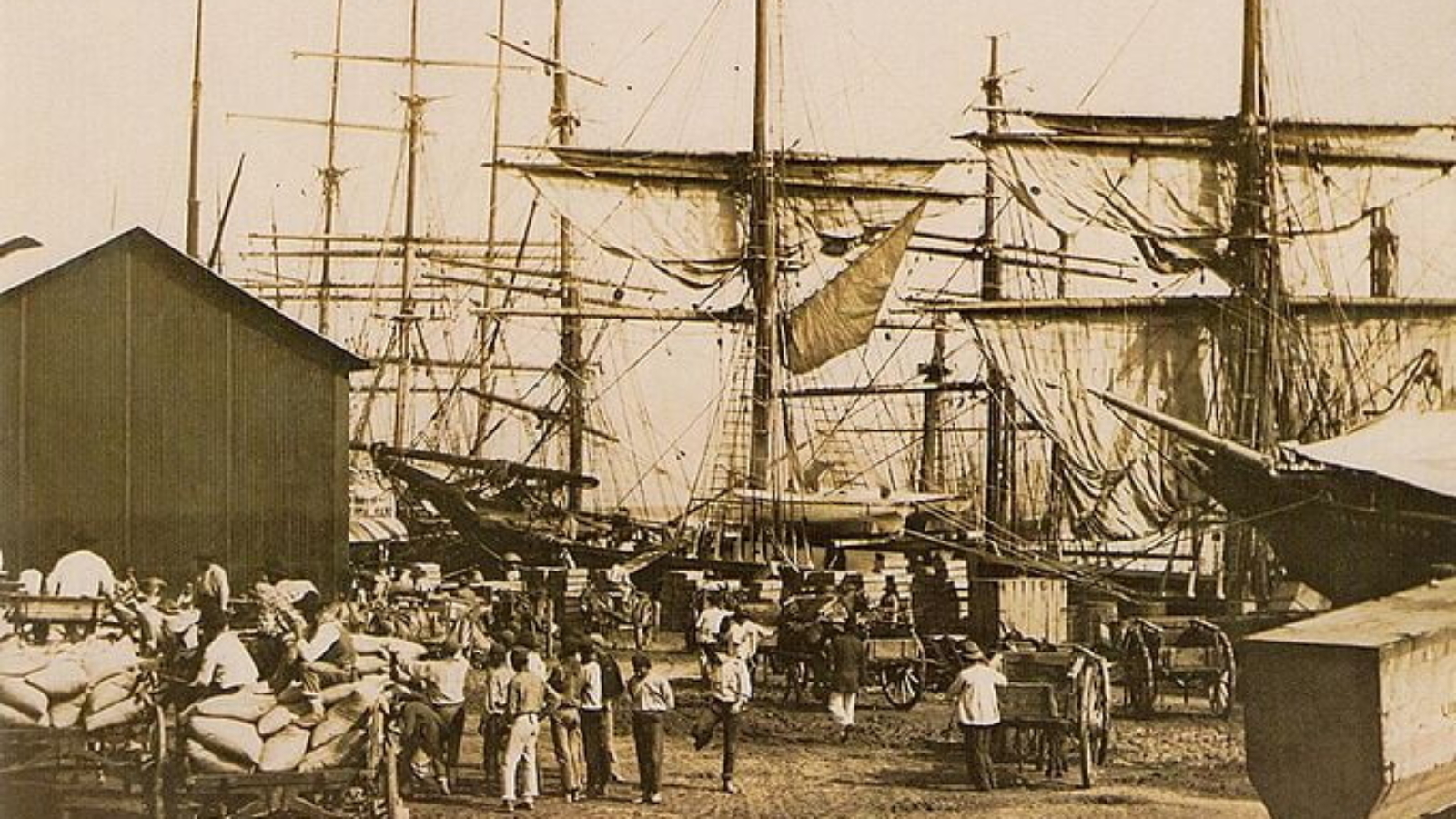
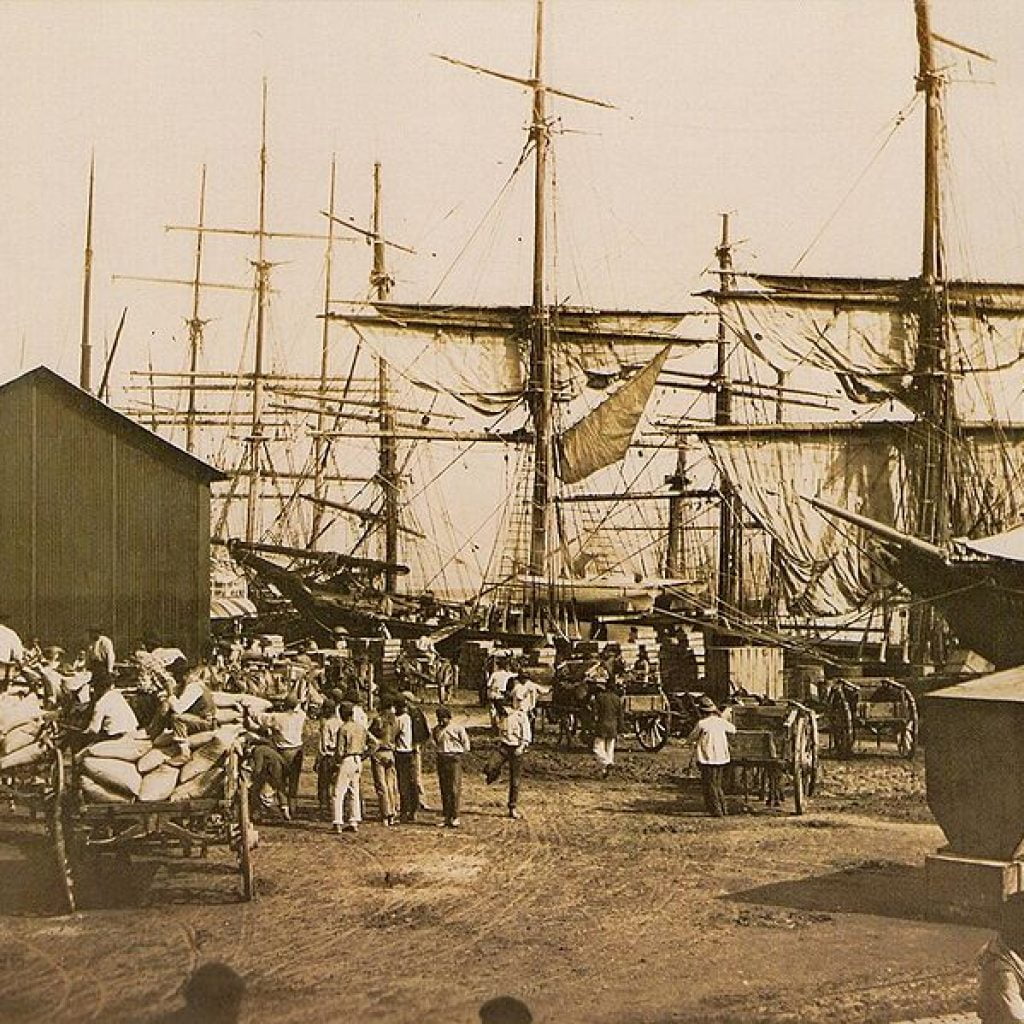
Did you know 40% of the worlds coffee supply is produced by Brazil? Over 80% of this coffee goes through the Santos port!

Since the 19th Century, Brazil Santos has been a blend of coffees from the region of Minas Gerais (60%) that adds acidity and consistency to the blend. This coffee is a mix of over 1000s of  different farms. Alto mogiana region  (25%)  brings body and sweetness to the blend but is also a blend of 100s of farms in that region. And about 10-15% of coffee comes from other regions in Brazil such as Norte Pioneiro Do parana and Espirito Santo. 

How does Brazilian Santos Give Brazilian Coffee a bad name?

Brazil Santos blend can have different types of quality and characteristics but always offers a poor example of Brazilian coffee as it doesn’t offer the whole trade stability the farmers deserve. But for centuries has been the base of many blends and is traded in the C market as the 2nd most traded commodity in the world. 

To deliver consistency in the same way Brazil Santos has been doing for centuries, direct trade offers better and more clear characteristics of flavours because the coffee comes from one single farm. Take for example our  Agua Santa green beans, they are grown and farmed by my Aunt and Uncle, there is not blend, just great coffee from on region in Sao Paulo.

Next time you go shopping, would you rather buy your things in one shop that has great prices and consistent quality, or will you visit 1000s of shops getting a blend of what you need at lower quality? If you would like direct trade coffee for you cafe or maybe you are a small one man outfit, please enquire about our wholesale coffee beans here.