
In 2023-2024, global coffee production rose 5.8% to a record of 178 million bags. Global coffee consumption rose by 2.2% to a record of 177 million bags. There is still a surplus of 1 million bags. What we are experiencing is not necessarily a shortage of coffee but a shortage of coffee stock which kept the prices low. As the world is uncertain, many are moving away from company stocks and shares and moving towards other raw materials like gold and silver. Other raw materials such as oil, water and coffee that are consumables are also a safer investment against inflation and other shares and are adding pressure on the physical coffee market.
As for the latest coffee news from the previous week…
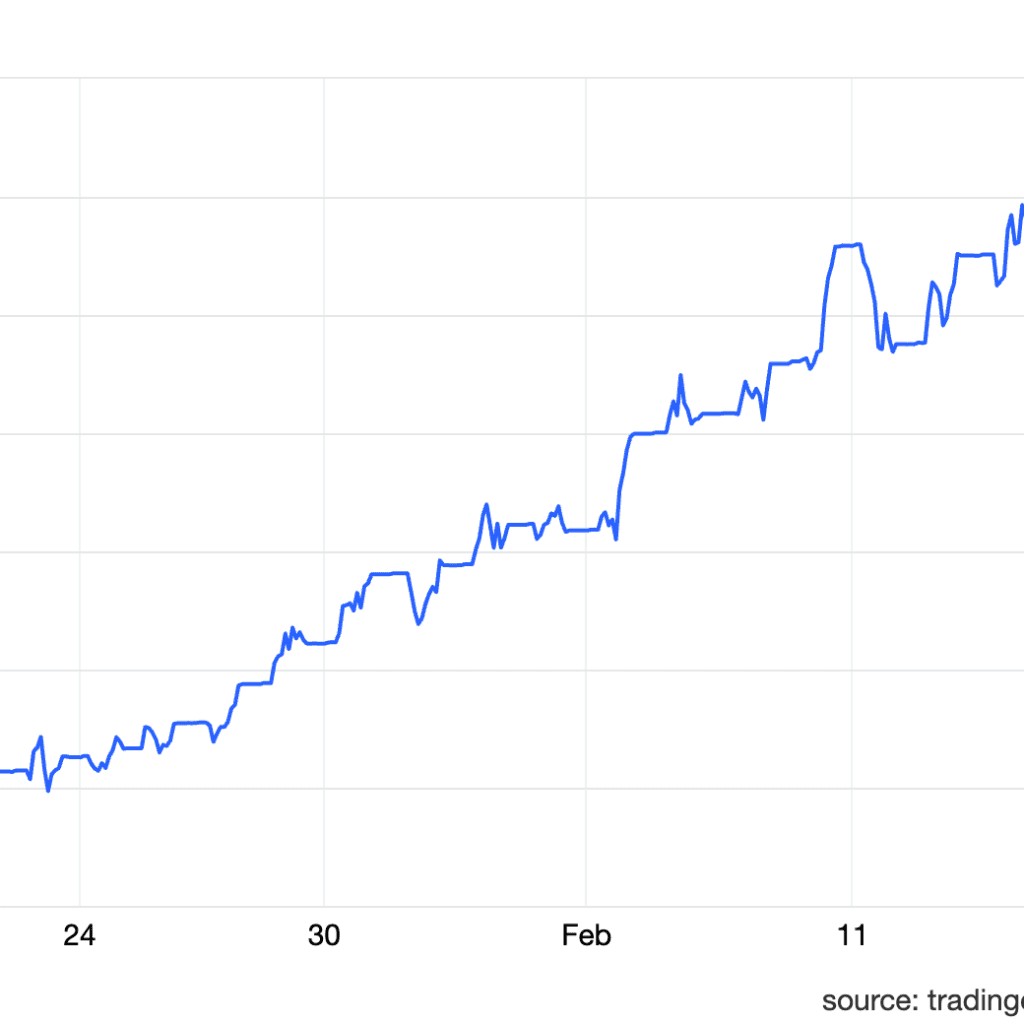
Market Overview: Arabica coffee futures hit new historical records this week on ICE Futures US, with March contracts reaching US$ 4.4085 per pound, a new record, before experiencing a sharp decline on Friday, 14 February. Despite this drop, Arabica contracts rose 3.80% for the week.
Market Fundamentals: Fundamentals of the coffee market remain the same with low stocks in both producing and consuming countries. Brazil’s situation remains particularly concerning, with estimates suggesting only 10-15% of the 2024 harvest remains with coffee growers. This creates challenges for meeting domestic consumption (approximately 1.7 million bags monthly) and export commitments through June. Weather conditions are adding pressure. According to CLIMATEMPO, this week there is a forecast for dry and hot weather in main coffee-producing areas until late February, potentially affecting bean development.
Stock Levels: ICE Futures US-certified coffee stocks decreased by 10,536 bags to a total of 839,399 bags. While this represents an increase of 536,937 bags from last year’s 302,462 bags, stocks have fallen by 23,339 bags this last week alone.
Physical Market: Brazil’s physical market remained calm this week despite sharp price increases over the past two months almost daily. Good quality Arabica coffee exceeded R$3,000 per bag, though trading volume remained low. Many sellers are holding back at current price levels, leading to transaction volumes below domestic consumption and export requirements.
Brazilian Exports: CECAFÉ reported January exports of 3,976,765 bags, slightly lower (approximately -1.63%) than January 2024 but up 1.35% from December. The breakdown includes 3,278,125 bags of Arabica, 328,074 bags of Conilon, and 365,598 bags of instant coffee. As of Friday, 14 February, shipments totalled 1,203,605 bags, with certificates of origin requests at 1,422,998 bags.
Currency Impact: The Brazilian Real closed at R$5.6970 to the dollar, down 1.23% for the last week. March contracts in New York closed on Friday, 14 February at R$3,163.23 per bag.
Leave A Comment
You must be logged in to post a comment